Pensioners versus the euro: how will the euro withstand the growing pressure on European welfare states?
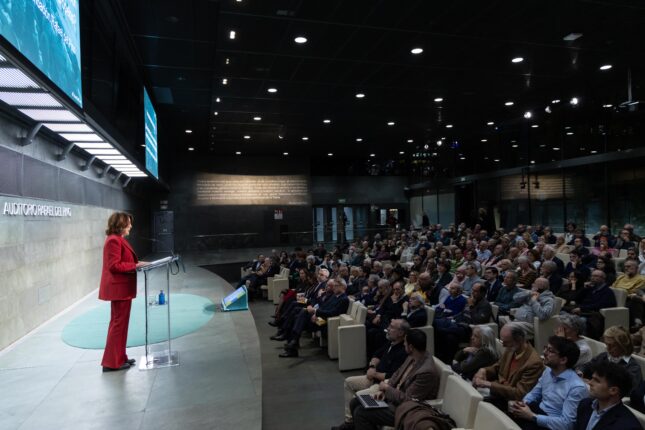
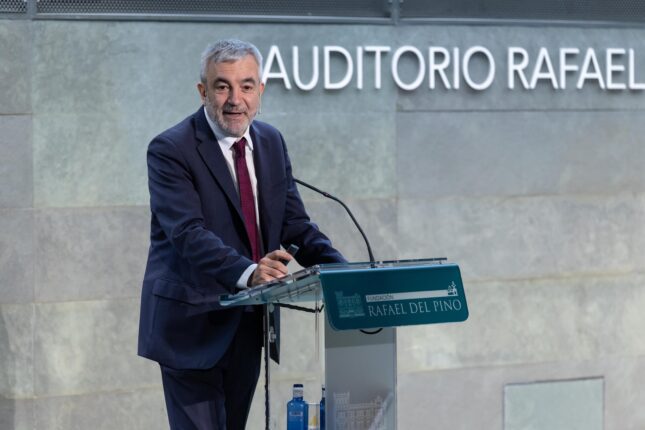
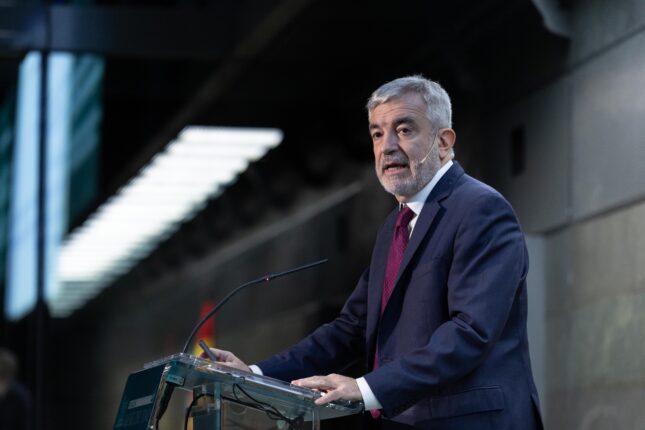
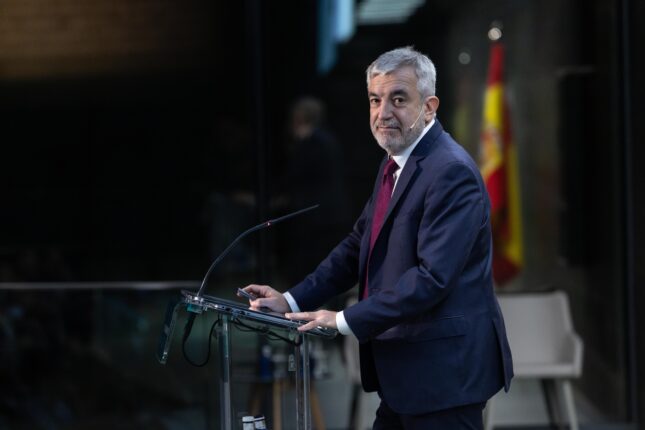
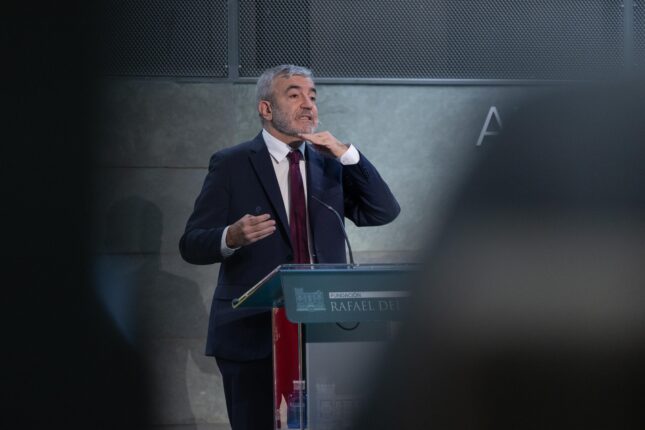
On 11 December, the Rafael del Pino Foundation organised the Keynote Lecture «Pensioners and the Euro: How will the Euro resist the growing pressure on European welfare states?» given by Luis Garicano, on the occasion of the presentation of the book «Challenges, Evolution, and Future of the Euro» by John H. Cochrane, Klaus Masuch and Luis Garicano.
Luis Garicano He is a professor of public policy at the LSE and a member of the CEPR. He returned to academia in 2022 after serving as a Member of the European Parliament (MEP), where he was Vice-President of the Renew Europe group, overseeing economic affairs and coordinating its work in the Committee on Economic and Monetary Affairs. Previously, he spent a decade at the University of Chicago Booth School of Business, where he was Professor of Economics and Strategy, and another decade at the LSE as Professor in the Management and Economics Departments. He later taught Economics and Strategy at IE Business School in Madrid. He has also been a visiting professor at MIT, Columbia Business School and London Business School.
Summary:
In his keynote speech at the Rafael del Pino Foundation, Luis Garicano analysed the structural challenges facing European monetary union in a context marked by rapid population ageing, rising pension expenditure and growing fiscal pressure on Member States. The speech was part of the presentation of the book Challenges, Evolution, and Future of the Euro, written together with John H. Cochrane and Klaus Masuch, a work that offers an in-depth reflection on the institutional architecture of the euro after more than two decades of operation.
Garicano argued that the survival of the euro has been conditioned by a succession of extraordinary crises — the global financial crisis, the euro crisis, the pandemic and geopolitical tensions — which have forced the European Central Bank (ECB) to adopt exceptional measures to preserve the stability of the single currency. These interventions, while necessary to prevent the collapse of the monetary union, have progressively eroded the separation between monetary policy and fiscal policy, which is one of the founding pillars of the euro.
One of the central themes of the conference was the impact of demographic change on the sustainability of the European model. The rapid increase in the retired population, coupled with the stagnation of the working-age population, is placing growing pressure on pension systems and public finances. Garicano stressed that this phenomenon inevitably leads to political tensions that hinder fiscal discipline, especially in countries with higher levels of implicit debt associated with the welfare state.
In this context, the author posed a fundamental “trilemma” for Europe: it is impossible to simultaneously maintain a stable currency without inflation, full fiscal autonomy for Member States, and generous pension systems as they currently exist. According to Garicano, recent practice shows that Europe has, de facto, opted to relax monetary stability in order to sustain social spending, transferring to the ECB a fiscal stabilisation function that exceeds its original mandate.
The conference also analysed the incentives created by this dynamic. The expectation that the ECB will act as the ultimate guarantor of sovereign debt reduces the pressure to undertake structural reforms at the national level and delays the completion of the institutional architecture of the euro. Among the pending reforms, Garicano highlighted the absence of an orderly sovereign debt restructuring mechanism, the incomplete banking union—in particular, the lack of a European deposit guarantee scheme—and the weakness of fiscal discipline mechanisms for large Member States.
Faced with this diagnosis, Garicano advocated a reformist rather than a disruptive approach. Far from proposing full debt mutualisation or complete fiscal union, he advocated strengthening existing institutions by creating a European fiscal authority capable of managing sovereign crises, insulating the ECB from fiscal pressures and restoring incentives for budgetary responsibility. The aim, he stressed, is not to dismantle the European welfare state, but to ensure its long-term viability without compromising the stability of the currency.
Finally, the conference closed with a strategic reflection: Europe has the human, institutional and economic capital necessary to face these challenges, but it must act urgently. Without reforms that reconcile ageing, growth and monetary stability, the euro risks becoming a factor of fragility rather than a pillar of prosperity. The question is no longer whether Europe can afford to reform its model, but whether it can afford not to.
The Rafael del Pino Foundation is not responsible for the comments, opinions or statements made by the people who participate in its activities and which are expressed as a result of their inalienable right to freedom of expression and under their sole responsibility. The contents included in the summary of this conference are the result of the debates held at the meeting held for this purpose at the Foundation and are the responsibility of their authors.
The Rafael del Pino Foundation is not responsible for any comments, opinions or statements made by third parties. In this respect, the FRP is not obliged to monitor the views expressed by such third parties who participate in its activities and which are expressed as a result of their inalienable right to freedom of expression and under their own responsibility. The contents included in the summary of this conference are the result of the discussions that took place during the conference organised for this purpose at the Foundation and are the sole responsibility of its authors.