Dialogue between Anne Applebaum and Federico Steinberg
The new illiberal order: how the world is being reconfigured
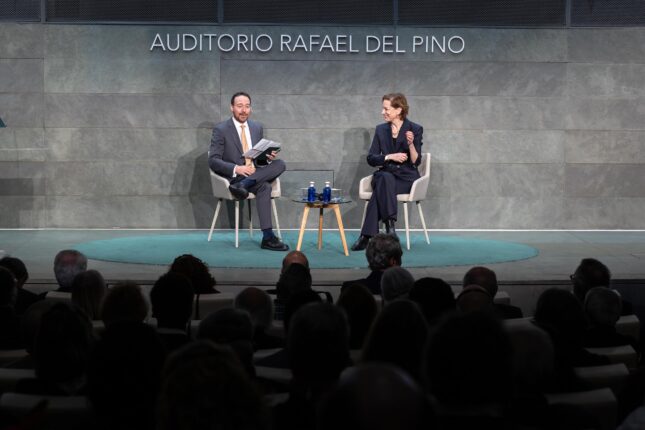
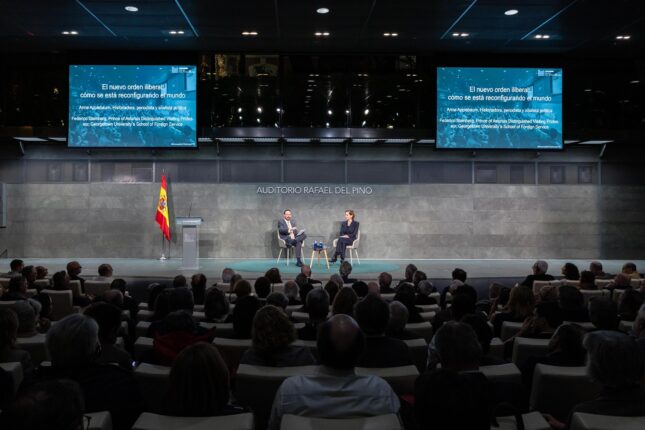
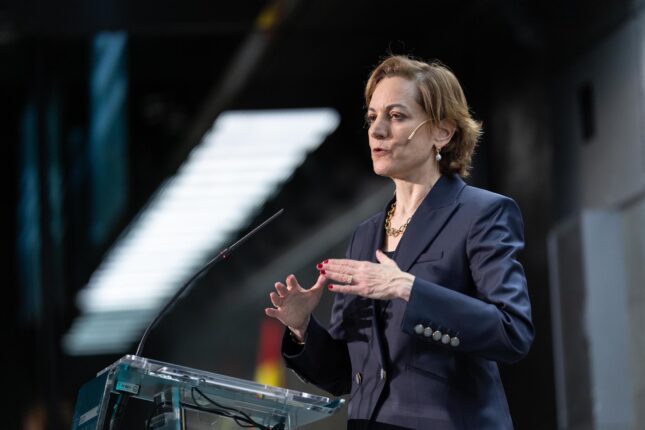
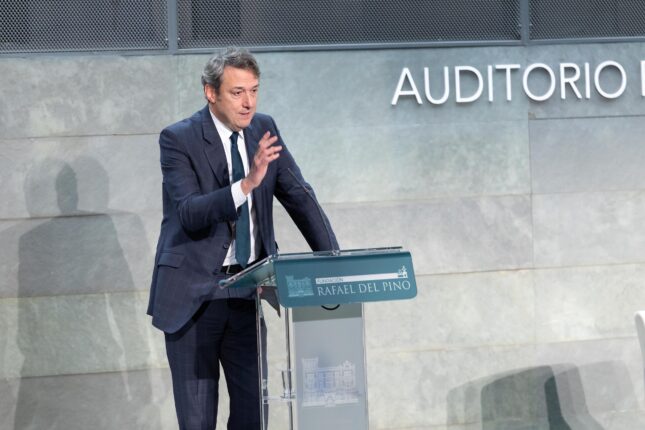
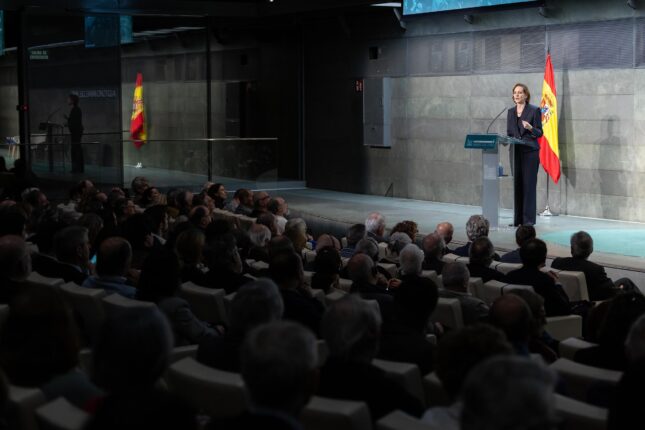
On 16 December, the Rafael del Pino Foundation organised a dialogue entitled «The new illiberal order: how the world is being reconfigured», with the participation of Anne Applebaum and Federico Steinberg.
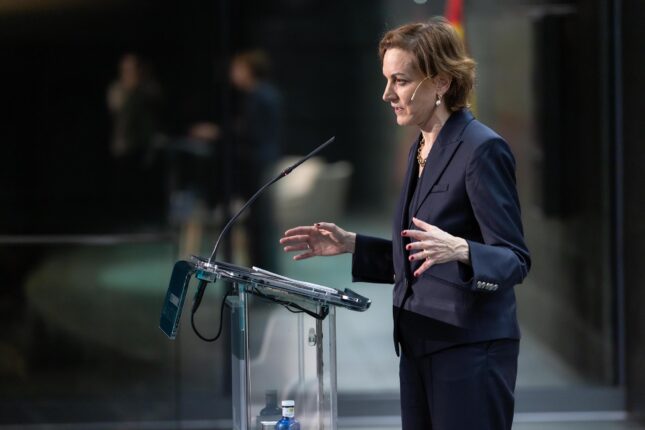
Anne Applebaum is a Pulitzer Prize-winning historian, journalist and political analyst internationally recognised for her work on totalitarian regimes, disinformation and contemporary challenges to liberal democracy. Her perspective combines historical rigour with a deep understanding of the current geopolitical context. Author of reference works such as Gulag: A History (Pulitzer Prize), Iron Curtain: The Crushing of Eastern Europe, Red Famine: Stalin's War on Ukraine, Twilight of Democracy: The Seductive Lure of Authoritarianism y Autocracy, Inc.: The Dictators Who Want to Run the World -Applebaum is one of the most influential voices in the global debate on the rise of authoritarianism and the erosion of democratic institutions. In 2024 he received the Peace Prize of the German Book Trade, one of the most important cultural prizes in Europe, and in 2021 the Francisco Cerecedo Journalism Prize, awarded by H.M. King Felipe VI. He is currently a Senior Fellow at the Johns Hopkins University School of Advanced International Studies (SAIS) and a columnist for The Atlantic, after having worked in media outlets such as The Washington Post, The Economist y The Spectator. From his dual academic and journalistic experience, Applebaum offers a unique perspective on international politics, new forms of authoritarian power and the role of information in 21st century democracies.
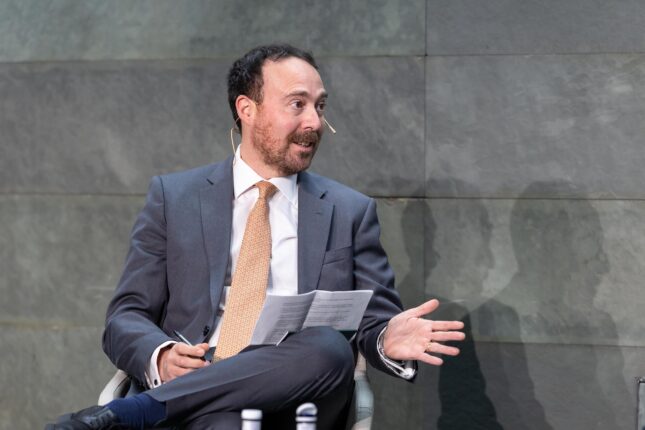
Federico Steinberg is Prince of Asturias Professor at Georgetown University and Senior Research Fellow at the Elcano Royal Institute. He is lecturer in the Department of Economic Analysis of the Universidad Autónoma de Madrid (on leave of absence) and Visiting Fellow of the Europe, Russia and Eurasia Programme of the Center for Strategic and International Studies (CSIS). Between 2019 and 2024, he was special advisor to the High Representative for Foreign and Security Policy and Vice President of the European Commission Josep Borrell and is a member of the Advisory Council of the Ministry of Economy, Trade and Enterprise of the Government of Spain. He has worked as a consultant for the World Bank in Washington D.C., Ghana and Bolivia, as well as in the Executive Office of the Secretary General of the United Nations in New York, and has taught and lectured in various postgraduate programmes in Europe and Latin America. He has published articles in journals such as Journal of Common Market Studies, Review of International Political Economy, New Political Economy y Economic Systems Research. He is also a regular columnist in several Spanish media and appears regularly on radio and television. Federico Steinberg holds a PhD in Economics from the Universidad Autónoma de Madrid, a Master's degree in International Political Economy from the London School of Economics and a Master's degree in International Relations from Columbia University (New York).
Summary:
On 16 December, the Rafael del Pino Foundation held a dialogue «The New Illiberal Order: How the World Is Being Reconfigured»with the participation of Anne Applebaum, historian and journalist specialising in authoritarianism and geopolitics, and Federico Steinberg, senior researcher at the Elcano Royal Institute and professor at Georgetown University. The meeting closed the cycle of 25th anniversary of the Foundation, offering high-level reflection on the transformation of the international order and the challenges facing liberal democracies.
A historic shift in the international order
Anne Applebaum proposed understanding the current moment as a “historic ”turn": the return of ideas that were thought to have been overcome, such as ethnic nationalism, spheres of influence, sovereignty conceived as exclusion, and politics understood as permanent confrontation. In this context, polarisation ceases to be a by-product of democratic pluralism and becomes a strategic tool aimed at dividing societies, eroding institutions and delegitimising the rule of law.
Networked autocracies: cooperation without ideology
One of the cornerstones of the new illiberal order is the cooperation between authoritarian regimes. Far from a shared ideology, Applebaum highlighted a functional convergence operating on three levels: economic (cross-investment between state-owned companies and mechanisms to circumvent sanctions), military-industrial (material cooperation in conflicts such as Ukraine) and narrative (a common repertoire that identifies the language of liberal democracy as the enemy: judicial independence, free press and checks and balances). This liberal grammar is particularly uncomfortable for autocracies because it is the same one used by their internal opposition to denounce corruption and injustice.
The United States and the retreat of democratic leadership
The dialogue addressed the change in US policy, characterised by the emergence of an administration that no longer sees itself as the leader of the democratic world or a promoter of democracy abroad. Rather than a diagnosis of the regime, Applebaum described a repertoire of practices aimed at straining institutional limits, altering electoral incentives and normalising exceptionalism. The strategic consequence is a vacuum that autocracies exploit to weaken Western cohesion and transatlantic relations.
Europe at a crossroads
Europe appears simultaneously as objective and alternative. The discussion on the US National Security Strategy highlighted a narrative that presents the European Union as a problem rather than an ally. Applebaum warned of the risk this poses to US security itself by downplaying real threats and refocusing attention on a culture war. At the same time, she pointed to a key explanation: the EU is now the actor with the greatest regulatory capacity on large technology platforms, which introduces incentives to weaken their regulatory power.
The digital public sphere and democratic quality
Far from a binary debate between censorship and freedom of expression, the dialogue focused on the digital public space architecture. The central issue is not only who can speak, but who amplifies, what goes viral, and with what opacity. The relevant regulation, it was emphasised, is the algorithmic transparency and accountability, to avoid incentives that encourage outrage and polarisation.
Migration: public policies versus policies of fear
Applebaum distinguished between two conversations on migration. One, legitimate, focused on absorption capacity, integration, and updating asylum frameworks in a context of mass movements. The other, instrumental, based on manufacture of cultural fear as a lever of power. The risk for democracies is that the latter will colonise the former and block reasonable deliberation.
Ukraine and lasting peace
The war in Ukraine was analysed as decisive test for the international order. Lasting peace, it was argued, requires credible security guarantees; a ceasefire without them would make reconstruction unfeasible and perpetuate the threat. The conflict is colonial in nature and will only end when Russia accepts that Ukraine is not part of its imperial sphere. In this context, the growing role of Europe and the rapid development of the Ukrainian military industry were highlighted.
A historical lesson for democracies
The dialogue concluded with a warning: the recurring mistake of democracies in the face of extremism is the fragmentation of the political centre when the rules of the game change. At critical moments, defending the liberal framework requires broad alliances between the centre-left and centre-right to protect judicial independence, media pluralism and electoral integrity.
The new illiberal order is not just a redistribution of power, but a dispute over the rules, discourses and institutions that make democracy possible. Europe faces a strategic decision: to resign itself to fragmentation or to assert itself as a pole of the rule of law, regulatory stability and multilateral cooperation in a changing world.
The Rafael del Pino Foundation is not responsible for the comments, opinions or statements made by the people who participate in its activities and which are expressed as a result of their inalienable right to freedom of expression and under their sole responsibility. The contents included in the summary of this conference are the result of the debates held at the meeting held for this purpose at the Foundation and are the responsibility of their authors.
The Rafael del Pino Foundation is not responsible for any comments, opinions or statements made by third parties. In this respect, the FRP is not obliged to monitor the views expressed by such third parties who participate in its activities and which are expressed as a result of their inalienable right to freedom of expression and under their own responsibility. The contents included in the summary of this conference are the result of the discussions that took place during the conference organised for this purpose at the Foundation and are the sole responsibility of its authors.