Dialogue between Javier Colomina and Mira Milosevich
Javier Colomina and Mira Milosevich
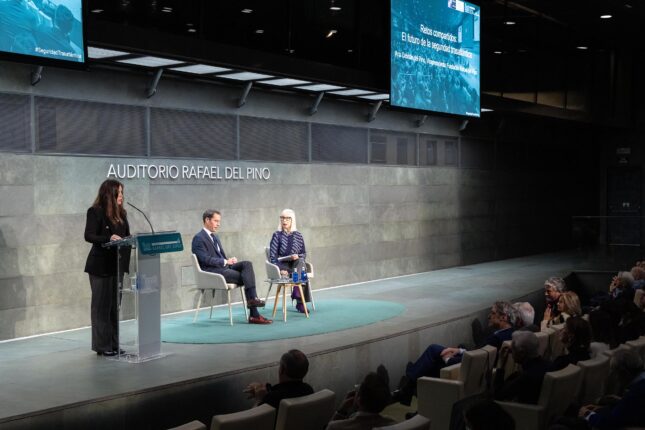
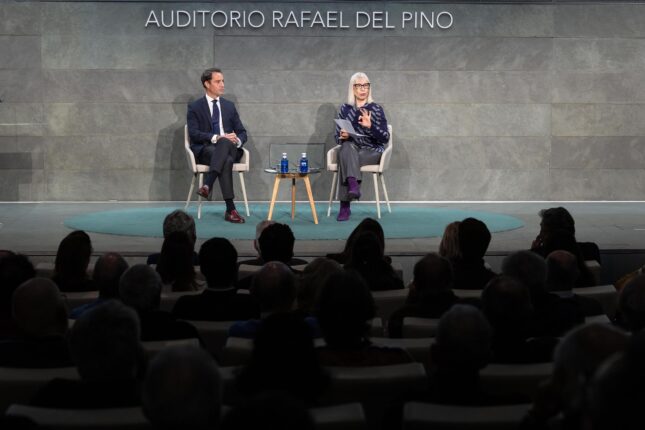
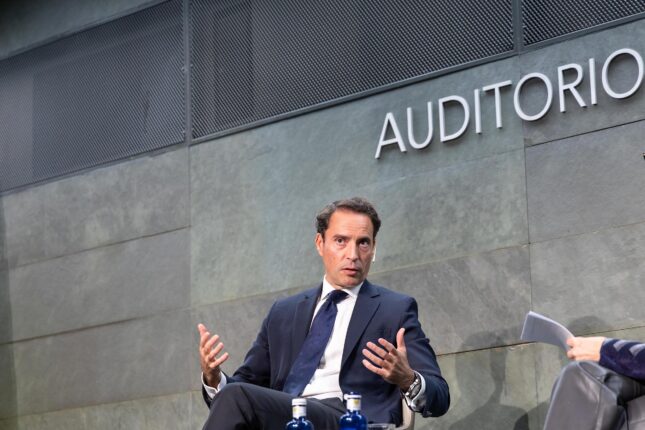
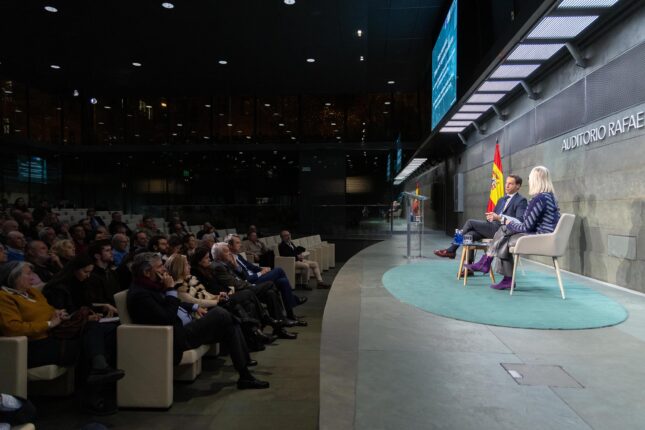
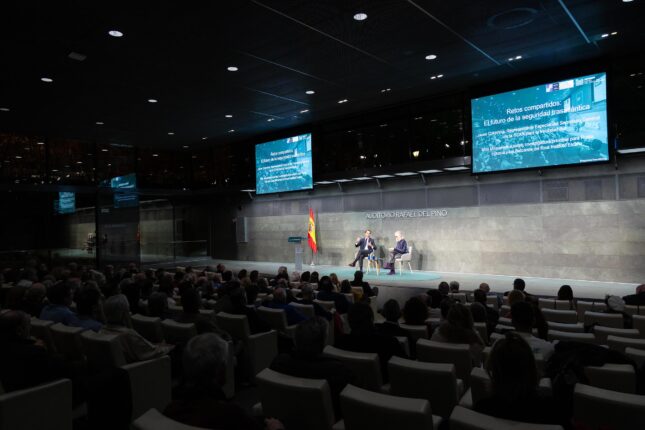
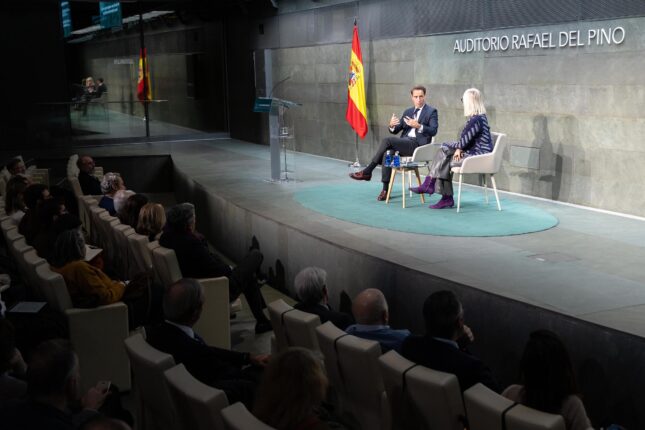
On 15 December, the Rafael del Pino Foundation organised a dialogue entitled «Shared Challenges: The Future of Transatlantic Security», with the participation of Javier Colomina and Mira Milosevich.
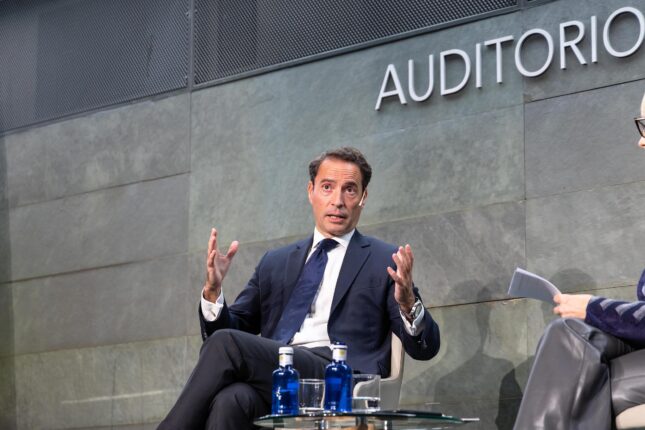
Javier Colomina is a Spanish diplomat and senior official at the North Atlantic Treaty Organisation (NATO), where he currently serves as Special Representative of the Secretary General for the Southern Neighbourhood. In this capacity, he leads NATO's political strategy in the Mediterranean, the Middle East and the Sahel, key regions for Euro-Atlantic security and stability. A member of the Spanish diplomatic career since 2001, he has developed an extensive career in international affairs, human rights and security policy. He has held positions at the Permanent Mission of Spain to the United Nations in New York, at the Spanish embassies in Damascus, Buenos Aires and Tokyo, as well as in the Cabinet of the Secretary of State for Foreign Affairs in Madrid. Between 2017 and 2021 he was Deputy Permanent Representative of Spain to NATO, before joining the Alliance's international structure. In 2021, he was appointed Deputy Assistant Secretary General for Political and Security Affairs and Special Representative for the Caucasus and Central Asia, positions from which he has promoted political dialogue and cooperation in regions of high geostrategic relevance. Recognised for his strategic vision and diplomatic skills, Colomina has made a decisive contribution to strengthening Spain's role in global debates on security, defence and international stability.
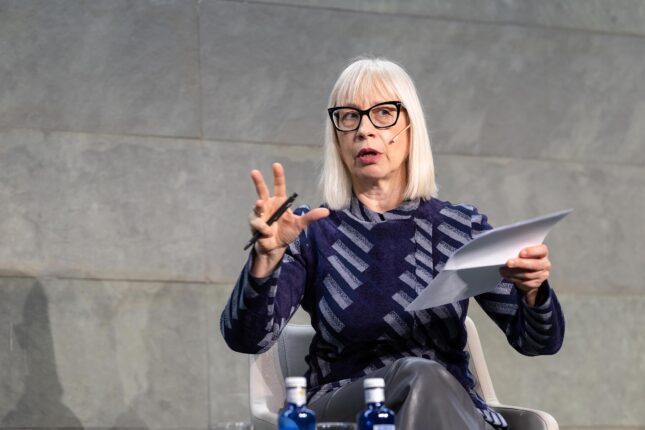
Mira Milosevich-Juaristi is a senior researcher for Russia, Eurasia and the Balkans at the Elcano Royal Institute, associate professor of The Foreign Policy of Russia at School of Global and Public Affairs from IE University. She has collaborated on several collective books and is the author of three books, two of them on the Yugoslav wars.The Sad and the Heroes. The Stories of Serbian Nationalists (200) y The Wheat of War. Nationalism and Violence in Kosovo (2001), published by Espasa Calpe. His most recent book is A Brief History of the Russian Revolution (2017, Galaxia Gutenberg, 7 editions). He has advised the European Parliament, the Spanish Parliament, the UK Parliament, NATO, STRATCOM and the US State Department on security issues related to disinformation as an instrument of Russia's hybrid warfare in the West. He is on the board of the Transatlantic Relations Initiative (IE University). He is a member of two working groups of the European Leadership Network, Contact Group on Western-Russian relations and the Russia-NATO Action Group. In 2020, it was Visiting Fellow of the programme on Europe, Russia and Eurasia of the Center for Strategic and International Studies (CSIS) in Washington, D.C. thanks to the financial support of Argyros Family Foundation. Mira Milosevich holds a PhD in European Studies from the Complutense University of Madrid and a degree in Sociology and Political Science from the University of Belgrade. Diploma of the Workshop in Global Leadership from the Harvard Kennedy School (2019) and CSIS executive courses diploma Understanding Russian Military Today (2020) y Understanding Washington (2020). His working languages are Spanish, English, Russian and Serbian.
Summary:
On 15 December, the Rafael del Pino Foundation held a dialogue «Shared challenges: the future of transatlantic security»with the participation of Javier Colomina, Special Representative of the Secretary General of NATO for the Southern Neighbourhood, and Mira Milosevich, senior researcher at the Elcano Royal Institute. The meeting addressed, from an analytical and institutional perspective, the changing cycle in Euro-Atlantic security architecture and its economic, industrial and fiscal implications for Europe.
Against a backdrop marked by the war in Ukraine, volatility in the Middle East and increasing strategic competition, the speakers agreed that the Atlantic Alliance faces transition towards a more “transactional” model”, where national interests carry more weight than in previous decades. In this context, it was emphasised that, despite political tensions, there is currently no viable alternative to the transatlantic link in terms of deterrence, advanced military capabilities and critical technologies. The discussion pointed to a scenario of rebalancing, with a possible partial reduction in the US presence and greater responsibility being assumed by European allies and Canada.
One of the focal points of the debate was the defence investment effort and its translation into capabilities. It was suggested that the spending target — linked to capability planning — responds to the need to cover accumulated shortfalls (air defence, ammunition, command and control, mobility and logistics), and that its implementation depends not only on budgetary resources, but also on the industrial capacity to produce and maintain large-scale equipment. In this regard, it was emphasised that the European challenge is not exclusively financial: it also requires coordination of procurement, industrial scaling, and strengthening command and planning structures, all of which are elements that condition operational autonomy.
Regarding Ukraine, it was argued that continued military support remains key, but that the passage of time introduces material and human constraints that force a rethinking of scenarios. The difficulty of altering the trajectory of the conflict without substantially changing the factors in the equation — whether through greater economic and technological pressure on Russia or through negotiation initiatives — was analysed, insisting that the goal must be a Ukraine sovereign and viable, backed by safety guarantees that make any agreement sustainable.
The dialogue also broadened the focus towards an approach of 360° security, where, in addition to Russia and terrorism, hybrid challenges (cyber, disinformation, economic coercion) are emerging, as well as the impact of actors such as China, Iran and North Korea on Euro-Atlantic stability. In the field of South Neighbourhood —Maghreb, Middle East and Sahel— the combination of risks and opportunities was highlighted: state fragility, security dynamics and geostrategic competition are intertwined with the need to build local capacities and long-term cooperative relationships, in an environment where strategic persistence is crucial.
Finally, the role of Spain as a committed ally, with a significant presence in missions on the eastern flank and relevant contributions in the south. At the same time, the importance of strengthening a strategic culture that supports long-term investment and planning decisions, linking security, resilience and industry as essential components of European competitiveness and stability in the new geopolitical phase.
The Rafael del Pino Foundation is not responsible for the comments, opinions or statements made by the people who participate in its activities and which are expressed as a result of their inalienable right to freedom of expression and under their sole responsibility. The contents included in the summary of this conference are the result of the debates held at the meeting held for this purpose at the Foundation and are the responsibility of their authors.
The Rafael del Pino Foundation is not responsible for any comments, opinions or statements made by third parties. In this respect, the FRP is not obliged to monitor the views expressed by such third parties who participate in its activities and which are expressed as a result of their inalienable right to freedom of expression and under their own responsibility. The contents included in the summary of this conference are the result of the discussions that took place during the conference organised for this purpose at the Foundation and are the sole responsibility of its authors.