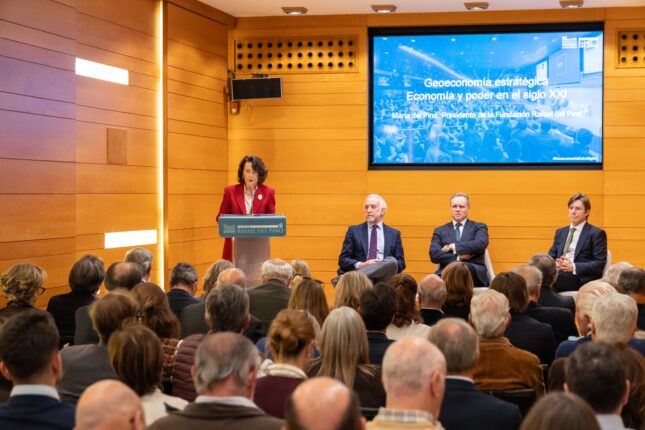
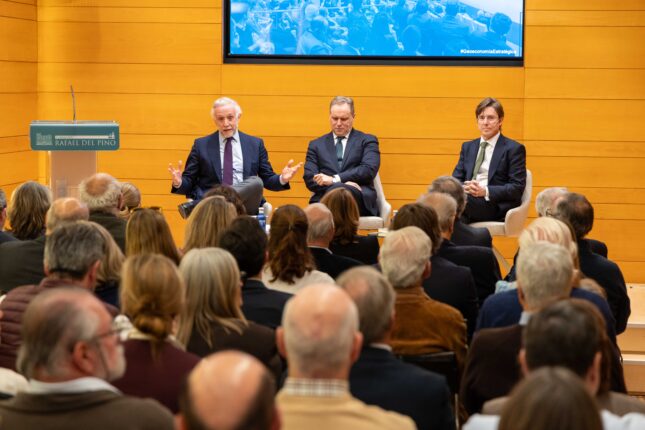
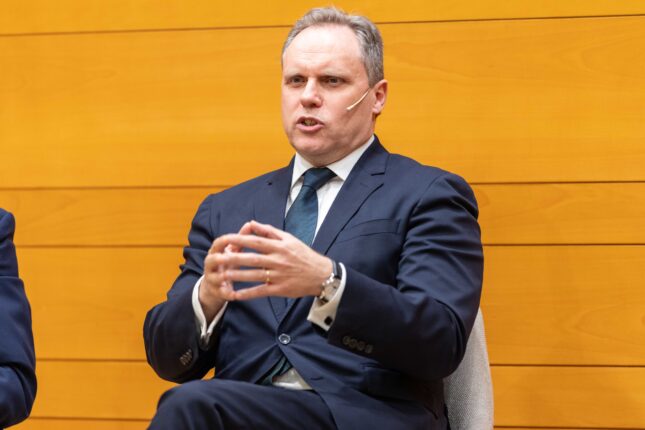
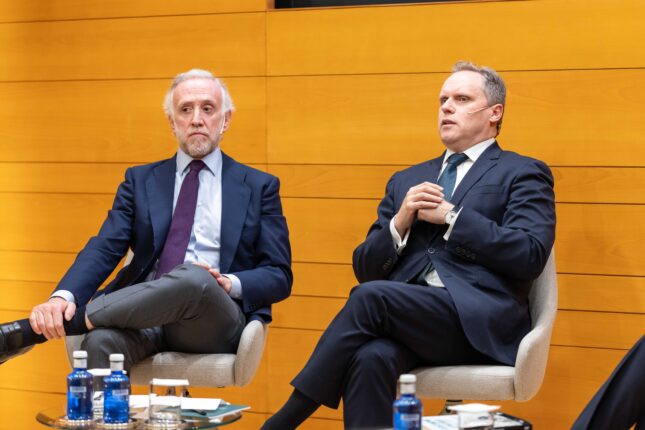
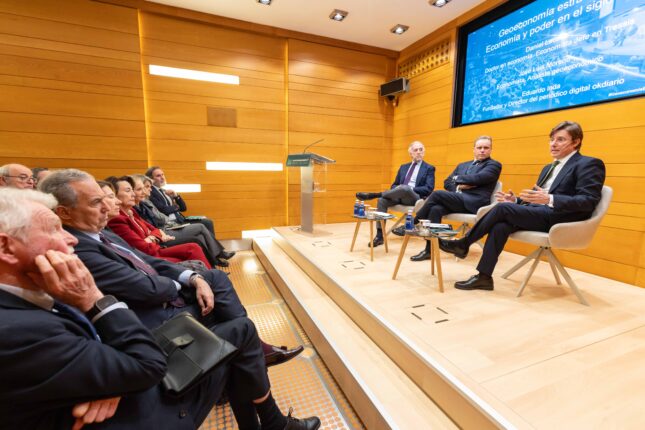
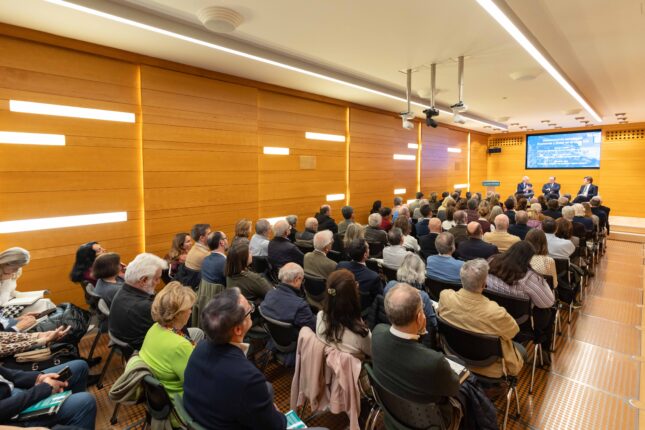
Dialogue between José Luis Moreno, Daniel Lacalle and Eduardo Inda
Strategic geo-economics: Economics and power in the 21st century
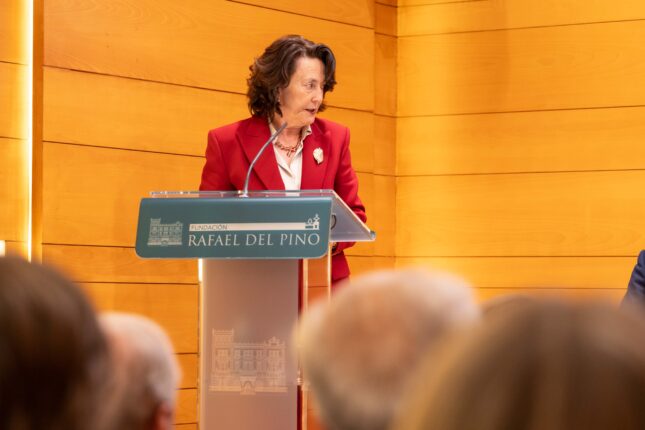
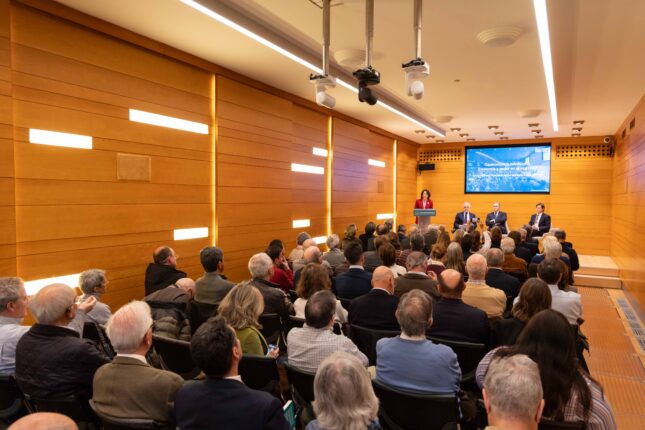
The Rafael del Pino Foundation organised, on 23 March 2026 at 7 p.m., the dialogue «Strategic Geoeconomics: Economy and Power in the 21st Century» with the participation of, among others José Luis Moreno and Daniel Lacalle on the occasion of the publication of the book «Strategic Geoeconomics» by José Luis Moreno.
José Luis Moreno holds a degree in Economics and Business Administration from the Universidad Pontificia de Comillas, ICADE and is a member of the Madrid College of Economists. Professor at the Universidad Francisco de Vitoria, he teaches sessions on strategic geoeconomics to executives at ESIC University. He has been director of Financial Policy, Treasury and Economy of the Community of Madrid during the financial crisis, from 2012 to 2015, under the presidency of Esperanza Aguirre. From 2015 to 2019 he was a councillor of the city of Madrid. Director of economy in the city councils of Madrid (2019 to 2021) and Pozuelo de Alarcón from 2025. Member of the boards of directors of Metro de Madrid and Mercamadrid, as well as director of the office for Madrid Nuevo Norte of the Community of Madrid. Co-author of the trilogy Advice for advisors. He also holds the Cross of Police Merit with white badge. He has been a member of equity of KPMG Europe Llp, director at Arthur Andersen and director at EY Abogados, as well as senior advisor of Everis, today NTT Data. Worked in Silicon Valley in California, supporting the entry process of Spanish technology-based companies. Mentor of Spanish companies in their internationalisation process, within the programme of the Spanish Chamber of Commerce. He collaborates weekly, as an economic analyst, explaining how geostrategy is affecting our local economy within the framework of the new world order on Negocios Tv, Radio Intereconomía, Capital Radio and OKDIARIO.
Daniel Lacalle D. in Economics, Chief Economist at Tressis S.V., professor of Global Economics at IE and IEB and investment fund manager. He holds a degree in Business Administration from the Universidad Autónoma de Madrid and a PhD Cum Laude from the Universidad Católica de Valencia. He is Chairman of the Instituto Mises Hispano, member of the Advisory Board of the Rafael del Pino Foundation and of ORFIN. He is also a member of the Academic Council of the International Freedom Foundation (FIL). His career in portfolio management and investment began at the hedge fund Citadel and continued at Ecofin Ltd. and PIMCO in the US and London. He is ranked number 5 in the Richtopia 2020 ranking of the world's most influential economists. He has been voted for five consecutive years among the top three managers in the Extel Survey, the Thompson Reuters ranking in the general strategy, oil and power categories. He writes a weekly column in El Español, and contributes monthly to CNBC and Bloomberg TV, as well as Antena 3, Cuatro, Telecinco, BBN Times, World Economic Forum, Hedge Eye, Epoch Times and Mises Wire, among others. Daniel Lacalle is the author of books on economics translated into several languages, including: "Nosotros los mercados", "Viaje a la libertad económica", "La gran trampa", "Libertad o Igualdad", and the latest, "Haz crecer tu dinero" (Deusto, 2022).
Eduardo Inda holds a degree in Information Sciences from the University of Navarra. He began his professional career at Antena 3 Radio and subsequently worked at ABC. In 1994 he joined The World, where he began in the Local section, covering the Madrid City Council and the Community of Madrid. In 1999 he became political correspondent in La Moncloa. Between 2001 and 2007 he directed El Mundo/Ibiza and Formentera y El Mundo/El Día de Baleares, During this period he uncovered important cases of corruption in the Islands. In 2007 he was appointed director of Brand, He held this position until 2011, when he became deputy director and head of Research at The World. Subsequently he founded and runs the digital newspaper OKDIARIO.
Summary:
On 23 March 2026, the Rafael del Pino Foundation hosted the dialogue «Strategic geoeconomics: Economics and power in the 21st century», with the participation of José Luis Moreno and Daniel Lacalle, moderated by Eduardo Inda, on the occasion of the presentation of the book Strategic geo-economics. The meeting was articulated as a reflection on the contemporary economy from a structural perspective, in which economic, energy and technological factors are integrated into a logic of power.
The basic approach is based on an analytical current that conceives geo-economics as the intersection between international political economy and strategic security. In this approach, markets, critical infrastructures and raw materials are no longer neutral elements but instruments of influence and competition between states.
Reconfiguring the international order
One of the central themes of the dialogue was the observation of a paradigm shift in the international system. In contrast to the narrative of a cooperative globalisation, the speakers described a scenario of structural competition between large blocs, articulated around the United States and China, with Russia, Iran and other actors aligned in confrontational dynamics.
This context implies an increasing instrumentalisation of the economy as a geopolitical tool. The control of energy, technology and supply chains thus acquires strategic value, shaping an environment in which economic decisions are increasingly conditioned by power considerations.
Energy, conflict and inflationary transmission
Energy was identified as one of the main vectors of this new geo-economy. Tensions in the Middle East, especially around the Strait of Hormuz, together with the prolongation of the conflict in Ukraine, introduce volatility in the markets and raise the geopolitical risk premium.
Although it was noted that oil has lost some of its capacity as a political weapon - due to greater US energy self-sufficiency and diversification of supply - the inflationary effects persist. Higher energy costs are being passed through to the real economy as a whole, affecting sectors such as transport, agriculture, industry and consumer goods.
As a result, inflation manifests itself particularly strongly in everyday consumption, showing a divergence between aggregate indicators and households' actual perceptions.
Structural vulnerabilities of the Spanish economy
The Spanish case was analysed as being particularly exposed to these dynamics. High external energy dependence, together with limited autonomy in strategic resources, configures an economic structure vulnerable to external shocks.
This is compounded by domestic factors such as fiscal pressure, regulatory rigidities and certain economic policy decisions which, according to the speakers, amplify the impact of external shocks. This combination helps to explain higher inflation than the European average and a lower adjustment capacity in the face of changes in the international environment.
Energy policy and security of supply
In this context, the debate underlined the need for an energy strategy aimed at security of supply and competitiveness. Nuclear energy was presented as a key element in a diversified mix, both for its stability and its capacity to reduce external dependence.
The advisability of extending the useful life of existing power plants, reviewing their taxation and advancing in new technologies, such as modular reactors, was raised. The importance of reinforcing the electricity grid and guaranteeing the availability of sufficient energy to sustain industrial and digital growth was also highlighted.
Technology, value chains and strategic dependence
The dialogue incorporated a technological dimension, noting that global competition extends to areas such as artificial intelligence, data centres, digital infrastructure and critical raw materials.
In this area, Europe's growing dependence on China in key sectors was warned of, which poses risks in terms of strategic autonomy. China's accumulation of industrial and technological capabilities was interpreted as part of a global positioning strategy that can generate asymmetric relations.
Impact on growth and employment
The economic implications of this geo-economic environment are also projected on growth and employment. Rising energy costs, uncertainty and loss of industrial competitiveness may translate into a slowdown in economic activity.
Nevertheless, certain resilience factors were identified in the Spanish economy, such as tourism, residential construction and technological development. Its potential, however, depends on structural conditions such as access to affordable energy, regulatory stability and the ability to attract investment.
Strategic positioning and international partnerships
The colloquium concluded with a reflection on Spain's international positioning. The speakers defended the need to strengthen relations with the partners in the Atlantic area - the United States, Europe and Latin America - as a strategic priority.
Against this backdrop, scepticism was expressed regarding a structural rapprochement with China, considering that it responds to a logic of power accumulation rather than balanced cooperation. In this sense, it was stressed that contemporary geo-economics demands not only economic efficiency, but also strategic coherence in the definition of alliances.
The Rafael del Pino Foundation is not responsible for the comments, opinions or statements made by the people who participate in its activities and which are expressed as a result of their inalienable right to freedom of expression and under their sole responsibility. The contents included in the summary of this conference are the result of the debates held at the meeting held for this purpose at the Foundation and are the responsibility of their authors.
The Rafael del Pino Foundation is not responsible for any comments, opinions or statements made by third parties. In this respect, the FRP is not obliged to monitor the views expressed by such third parties who participate in its activities and which are expressed as a result of their inalienable right to freedom of expression and under their own responsibility. The contents included in the summary of this conference are the result of the discussions that took place during the conference organised for this purpose at the Foundation and are the sole responsibility of its authors.