Dialogue between Mikhail Khodorkovsky and Mira Milosevic
Russia after Putin: scenarios for the opposition and the future of the regime
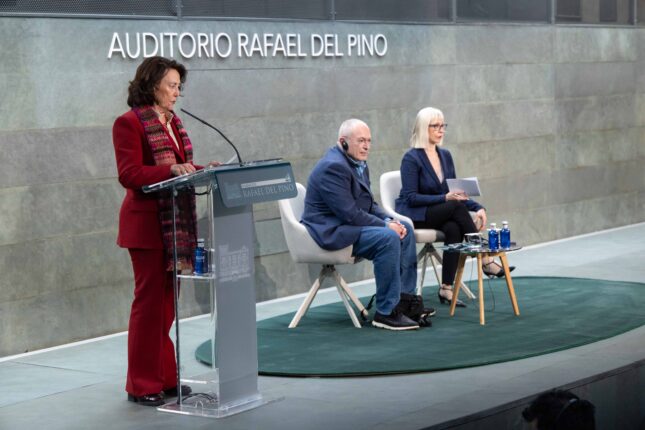
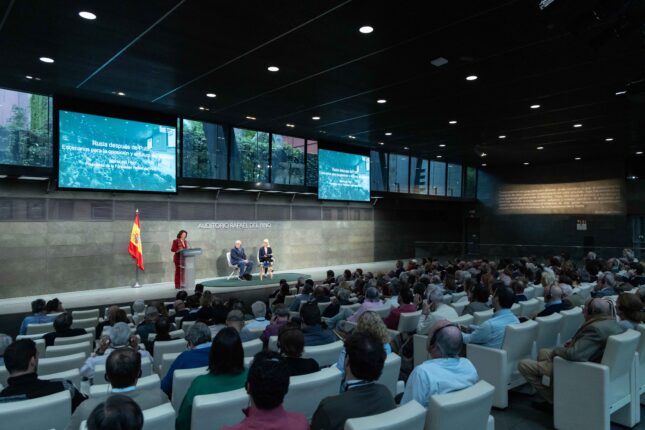
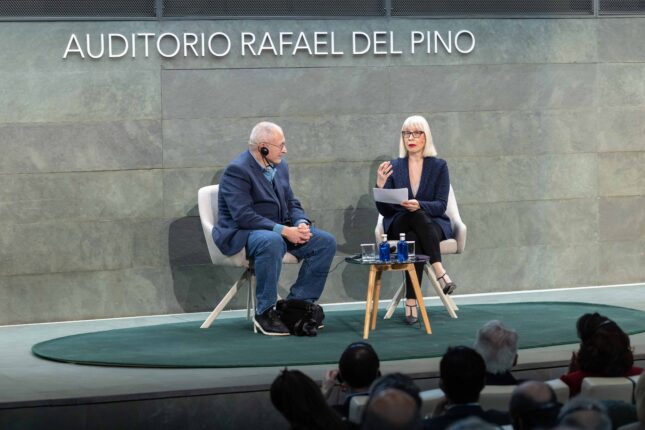
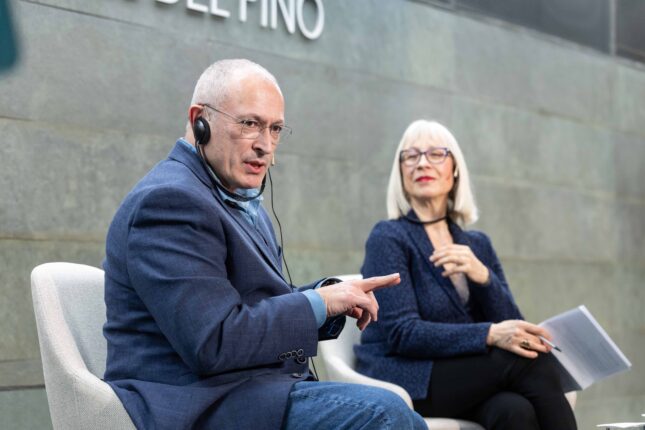
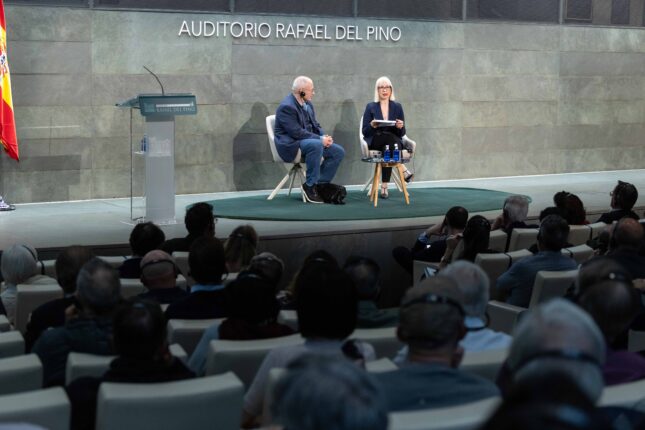
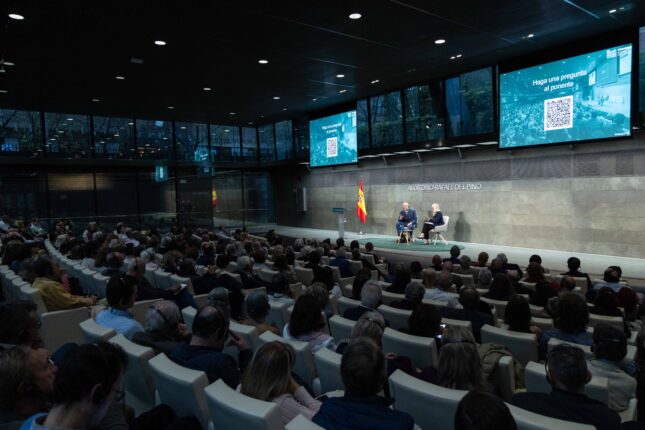
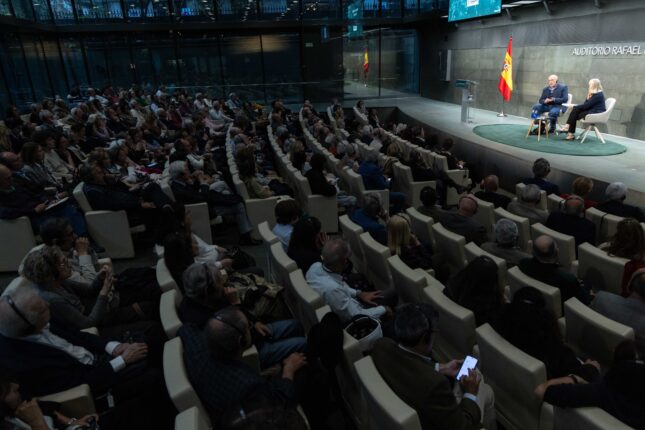
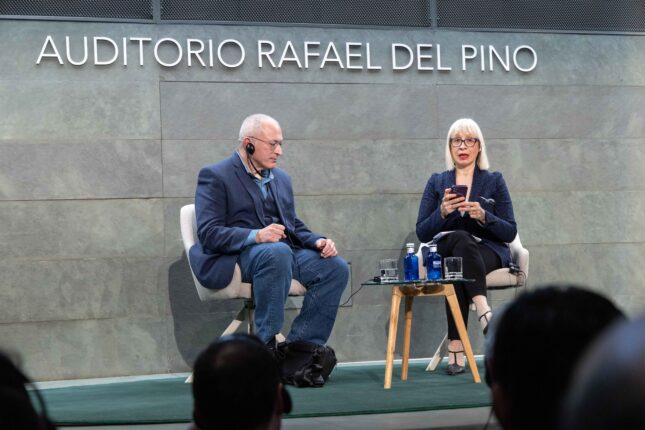
On 7 April 2026, the Rafael del Pino Foundation organised the dialogue «.«Russia after Putin: scenarios for the opposition and the future of the regime"in which the following participated Mikhail Khodorkovsky y Mira Milosevich.
Mikhail Khodorkovsky is a Russian businessman and philanthropist. He is a former chairman of YUKOS, one of the world's largest oil companies, where he promoted the adoption of international management standards and a significant increase in production. In 2001 he founded the Open Russia Foundation, aimed at strengthening civil society in Russia. After publicly criticising the regime's corruption, he was arrested in 2003 and sentenced to fourteen years in prison in a trial considered to be politically motivated. He was declared a prisoner of conscience by Amnesty International and released in 2013. Since then he has promoted a vision of Russia based on the rule of law, respect for human rights, free elections and the strengthening of a pluralistic civil society. He is the founder of the NEST Centre, dedicated to the analysis of Russia and its environment. His trajectory has been captured in the documentary film Citizen K, directed by Alex Gibney.
Mira Milosevich-Juaristi is a senior researcher for Russia, Eurasia and the Balkans at the Elcano Royal Institute, associate professor of The Foreign Policy of Russia at School of Global and Public Affairs from IE University. She has collaborated on several collective books and is the author of three books, two of them on the Yugoslav wars.The Sad and the Heroes. The Stories of Serbian Nationalists (200) y The Wheat of War. Nationalism and Violence in Kosovo (2001), published by Espasa Calpe. His most recent book is A Brief History of the Russian Revolution (2017, Galaxia Gutenberg, 7 editions). He has advised the European Parliament, the Spanish Parliament, the UK Parliament, NATO, STRATCOM and the US State Department on security issues related to disinformation as an instrument of Russia's hybrid warfare in the West. He is on the board of the Transatlantic Relations Initiative (IE University). He is a member of two working groups of the European Leadership Network, Contact Group on Western-Russian relations and the Russia-NATO Action Group. In 2020, it was Visiting Fellow of the programme on Europe, Russia and Eurasia of the Center for Strategic and International Studies (CSIS) in Washington, D.C. thanks to the financial support of Argyros Family Foundation. Mira Milosevich holds a PhD in European Studies from the Complutense University of Madrid and a degree in Sociology and Political Science from the University of Belgrade. Diploma of the Workshop in Global Leadership from the Harvard Kennedy School (2019) and CSIS executive courses diploma Understanding Russian Military Today (2020) y Understanding Washington (2020). His working languages are Spanish, English, Russian and Serbian.
Summary:
At a time marked by the erosion of the liberal order and the intensification of geopolitical rivalry, the dialogue held at the Rafael del Pino Foundation between Mikhail Khodorkovsky and Mira Milosevich addressed one of the most relevant unknowns on the international scene: what can be expected of Russia beyond Vladimir Putin. However, far from focusing on the short term or on hypotheses of succession, the conversation turned to a deeper question: to what extent is a real transformation of the Russian political system possible?.
Khodorkovsky's central thesis is particularly significant for its structural character. Russia's problem, he argues, lies not only in the current leadership, but in the persistence of a historically centralised political model that is weakly institutionalised and prone to reproduce authoritarian dynamics. In this sense, Putin's eventual departure would not necessarily constitute a turning point but, at best, the beginning of an uncertain process.
The risk of reproducing authoritarianism
The metaphor that articulates his approach - “slay the dragon” - sums up this diagnosis well. It is not just a matter of overthrowing the autocrat, but of preventing his replacement from embodying a new version of the same concentrated power. Russian history offers numerous precedents in which regime change has not involved a fundamental transformation, but rather the adaptation of authoritarian structures to new contexts.
Khodorkovsky therefore insists on the need to address not only the political transition, but also the conditions that make it viable. Among them, he suggests replacing presidentialism with a parliamentary system, strengthening federalism and creating effective mechanisms to control power. However, the context itself - marked by the personalisation of the regime and the absence of a coherent ideology - makes the implementation of these reforms extremely difficult.
Beyond Western diagnoses
One of the most thought-provoking elements of the dialogue was the criticism of certain widespread interpretations in the West. In particular, Khodorkovsky questions the idea that the Russian problem can be solved by a simple change of leadership, as well as the hypothesis of an eventual disintegration of the country.
In contrast to these views, he describes a culturally cohesive Russia that is structurally dependent on a strong central power. In this framework, the existence of an “external enemy” is not a circumstantial element, but a functional part of the political system, necessary to sustain internal cohesion and justify the concentration of power.
Ukraine as a political, not a military threat
The war in Ukraine is, according to this logic, part of a calculus that transcends the strictly strategic. Rather than responding to a direct military threat, the conflict would be explained by the transformative potential of a democratic and prosperous Ukraine. Its very existence as an alternative model - geographically and culturally close - would challenge the legitimacy of the Russian regime.
From this perspective, war appears as an instrument of political survival. At the same time, Khodorkovsky warns that its consequences will last for decades, especially in terms of the relationship between Russia and Ukraine, where he foresees a horizon of prolonged tensions that are unlikely to be resolved in the short term.
Propaganda, isolation and social perception
The analysis of Russian society introduces a key nuance for understanding the stability of the system. The combination of geographical isolation, limited exposure to the outside world and an omnipresent propaganda apparatus configures an environment in which large sectors of the population internalise official narratives.
Far from attributing this situation exclusively to coercion, Khodorkovsky stresses the cognitive dimension of the phenomenon: the systematic repetition of messages in different spheres - media, work and social environment - generates a coherent perception of the world that is difficult to challenge from within. In this context, the opposition faces not only political, but also cultural and psychological barriers.
Limited but existing opposition
Despite these restrictions, the dialogue points to the existence of a critical social base, albeit a minority one. According to the aforementioned data, around 15% of the population identifies with pro-European values, while millions of citizens consume oppositional content, even under risky conditions.
However, this opposition lacks operational capacity within the country, which shifts part of its activity abroad. In this sense, the Russian diaspora and the emigration of qualified profiles acquire strategic relevance, both because of their potential for future influence and because of their weakening effect on the regime itself.
A long transformation horizon
The final diagnosis is, in temporal terms, deliberately cautious. Even in a transition scenario, the transformation of Russia's political culture would require decades. Khodorkovsky draws parallels with historical processes such as German denazification, underlining that structural changes are not immediate, but the result of sustained processes over time.
In this context, the priority objective in the short term is not so much democratisation as conflict containment. Preventing the current confrontation between Russia and the West from escalating further appears to be a precondition for any future transformation scenario.
An uncertain transition
The debate ultimately offers a sober but consistent conclusion: post-Putin Russia is not shaping up as a clear break, but as a long, complex process deeply conditioned by historical inertias. More than the end of a leadership, what is at stake is the possibility - still uncertain - of redefining the very foundations of the Russian political system.
The Rafael del Pino Foundation is not responsible for the comments, opinions or statements made by the people who participate in its activities and which are expressed as a result of their inalienable right to freedom of expression and under their sole responsibility. The contents included in the summary of this conference are the result of the debates held at the meeting held for this purpose at the Foundation and are the responsibility of their authors.
The Rafael del Pino Foundation is not responsible for any comments, opinions or statements made by third parties. In this respect, the FRP is not obliged to monitor the views expressed by such third parties who participate in its activities and which are expressed as a result of their inalienable right to freedom of expression and under their own responsibility. The contents included in the summary of this conference are the result of the discussions that took place during the conference organised for this purpose at the Foundation and are the sole responsibility of its authors.