Lessons from the rise and fall of great civilisations
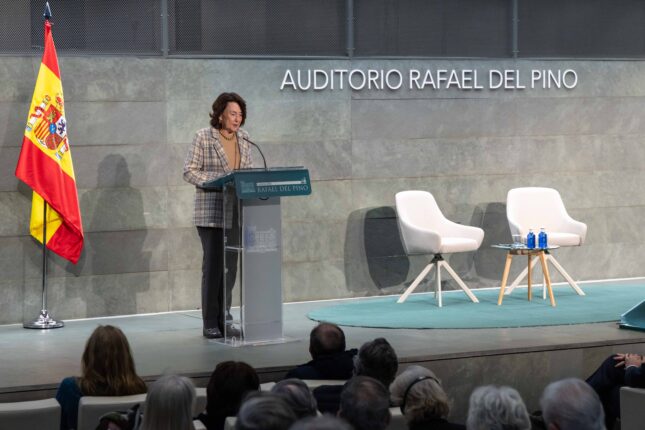
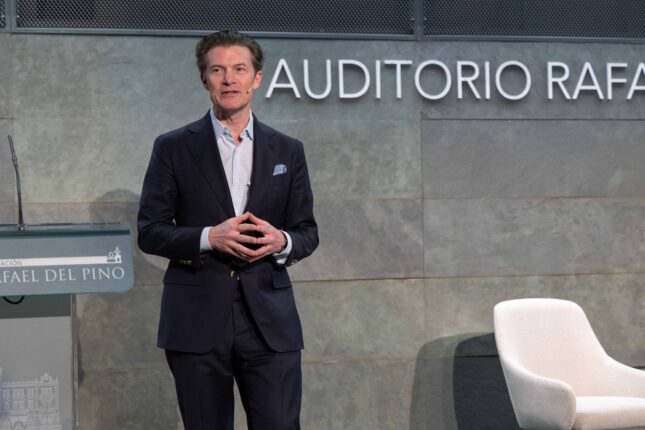
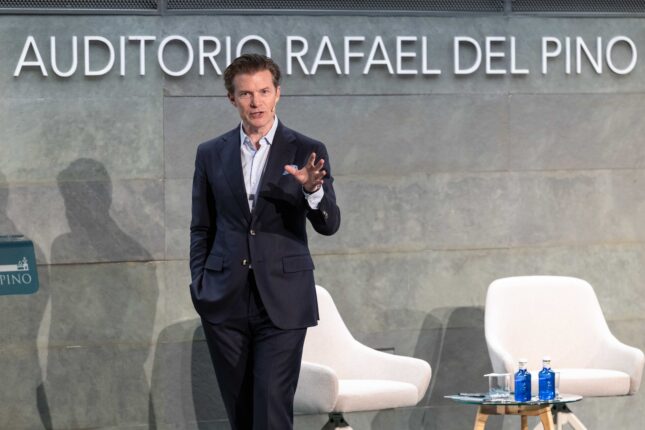
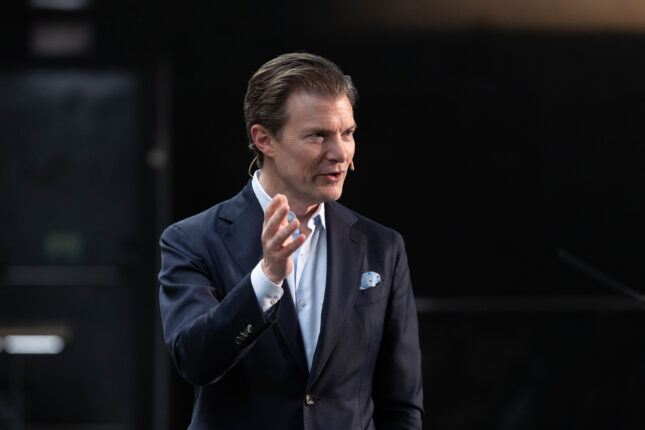
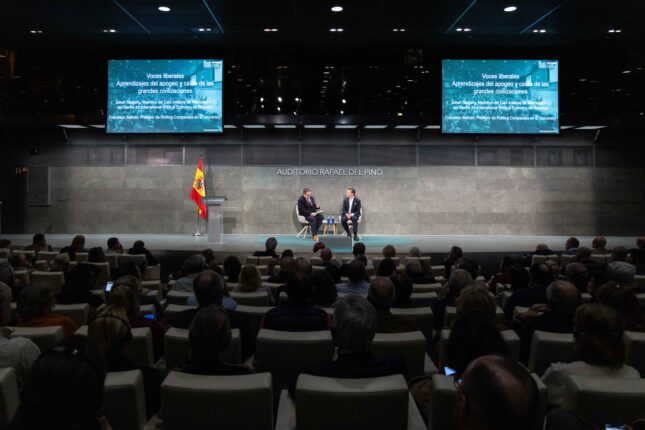
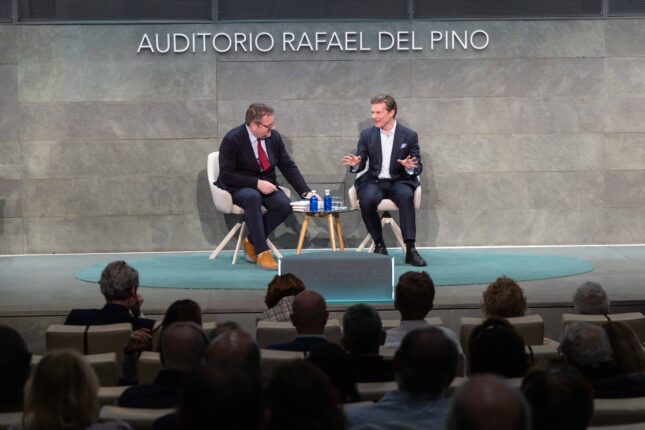
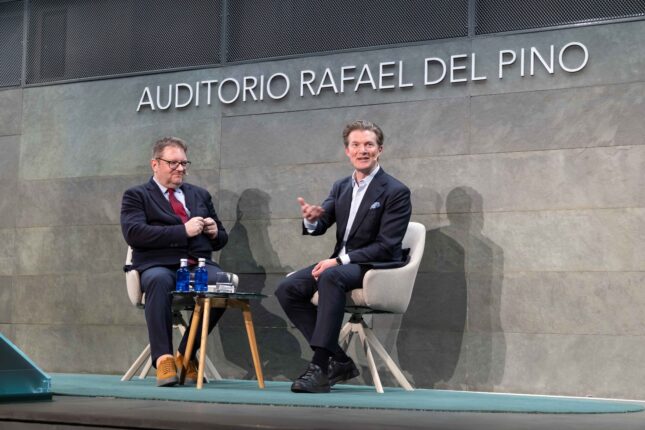
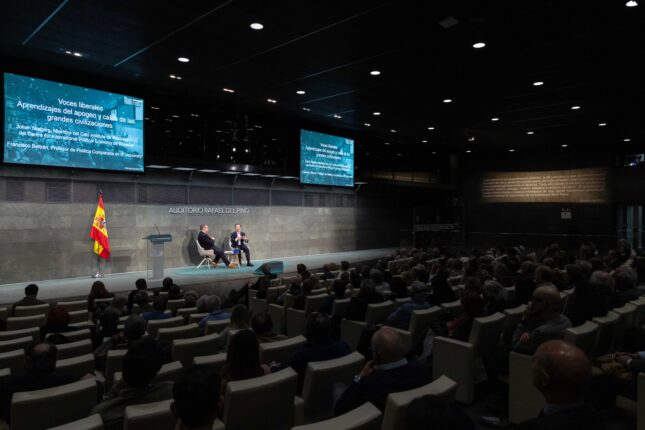
The Rafael del Pino Foundation organised on 2 March 2026 at 7 p.m. the Master Conference entitled «.«Liberal Voices: Lessons from the Rise and Fall of the Great Civilisations"which was given by Johan Norberg on the occasion of the publication of the book of the same title published by Deusto. After the conference, Professor Norberg spoke with Francisco Beltrán.
Johan Norberg is a Swedish author, lecturer and documentary filmmaker. He holds a Master's degree in History of Ideas from Stockholm University and a Master's degree in History of Ideas from Stockholm University. Senior Fellow at the Cato Institute in Washington, D.C. He has written numerous books on global economics, science and human progress including Progress, Open, The capitalist manifesto y Peak Human, translated into more than 30 languages and recognised by Financial Times y The Economist. He has also presented several documentaries for US public television and has received numerous international awards for his contribution to public debate.
Francisco Beltrán is director of REMCO. He holds a degree in Economics from the University of Valencia and in Political Science from the UNED, a postgraduate degree in Economics from the London School of Economics, a Master in Government from the Universidad Autónoma de Madrid, and a PhD in Political Science also from the UAM. He is Professor of Political Science at IE University, at the Universidad Autónoma de Madrid, and at New York University Madrid. He has been Professor of Comparative Politics at the Munk School of Global Affairs and Public Policy, and at the Department of Political Science at the University of Toronto between 2013 and 2021. Previously he was Visiting Professor at Lund University, Research Fellow at Wissenschaftszentrum Berlin für Sozialforschung (WZB), Visiting Professor at Munk School of Global Affairs, Research Fellow at the University of British Columbia, Vancouver, and Lecturer at the Universitat Oberta de Catalunya.
Summary:
The past 2 March 2026the Rafael del Pino Foundation hosted a keynote speech by Johan Norberg «Liberal Voices: Lessons from the Rise and Fall of the Great Civilisations,In his speech, Norberg proposed a comparative historical reflection on the factors that have allowed certain societies to achieve exceptional periods of creativity, prosperity and innovation - and on the causes that have sometimes also led to their decline.
The “golden ages” in history
Norberg analysed seven great moments of civilisational flowering - from classical Athens to the contemporary Atlantic world - to identify the common elements that characterise these boom periods. In his view, a “golden age” is defined not by territorial expansion or military power, but by a society's ability to generate simultaneous innovations in multiple fields -intellectual, scientific, technological or economic - that end up raising the standard of living of broad sectors of the population.
In this respect, he argued that periods of greater historical dynamism tend to emerge in contexts of exchange and openness, The European Commission's work is based on the principle of "knowledge societies", in which societies act as meeting places for diverse cultures, ideas and knowledge.
Imitation and innovation: the drivers of progress
One of the central arguments of the book is that historical progress rests on the interaction between two fundamental processes: imitation and innovation. The most successful societies have been those able to learn from other civilisations, adopt their best ideas and combine them creatively to produce new advances.
Athens, Rome, the Abbasid Caliphate, Song Dynasty China, Renaissance Italy, the Dutch Republic or the modern Atlantic world are examples of societies that prospered thanks to their ability to absorbing external knowledge and transforming it into new forms of organisation, technology and thinking.
Open institutions and a culture of possibility
Norberg also underlined the decisive role of the political and economic institutions in consolidating these periods of prosperity. Freedom of thought, the rule of law, protection of property and open markets allow new ideas to develop without being blocked by established interests.
But alongside the institutions, the author highlighted a less visible element: the existence of an “culture of possibility”.”, a social climate that values experimentation, intellectual competence and innovation. When societies accept change as natural and positive, opportunities for progress multiply.
Why civilisations decline
The conference also addressed the issue of decline. According to Norberg, civilisations rarely disappear for purely external reasons; often their decline is due to internal dynamics. Two recurrent trends stand out among them: complacency and fear.
Complacency arises when a society, having achieved high levels of prosperity, stops encouraging innovation and allows established interests to block change. Fear, on the other hand, can lead to authoritarian solutions or to closing society to the outside world, weakening the very mechanisms that had driven its prosperity.
The challenges of the present
In the subsequent dialogue with Francisco Beltrán, Norberg applied these reflections to the contemporary context. In his view, today's world is going through a paradoxical moment: despite geopolitical tensions, crises and conflicts, the last two centuries have generated the greatest gains in material well-being and poverty reduction in human history.
The continuity of this progress, he concluded, will depend on societies sustaining their openness to knowledge, trade and innovation, The EU's role is to avoid falling into the dynamics of closure, protectionism or over-regulation that can slow down economic and cultural dynamism.
The Rafael del Pino Foundation is not responsible for the comments, opinions or statements made by the people who participate in its activities and which are expressed as a result of their inalienable right to freedom of expression and under their sole responsibility. The contents included in the summary of this conference are the result of the debates held at the meeting held for this purpose at the Foundation and are the responsibility of their authors.
The Rafael del Pino Foundation is not responsible for any comments, opinions or statements made by third parties. In this respect, the FRP is not obliged to monitor the views expressed by such third parties who participate in its activities and which are expressed as a result of their inalienable right to freedom of expression and under their own responsibility. The contents included in the summary of this conference are the result of the discussions that took place during the conference organised for this purpose at the Foundation and are the sole responsibility of its authors.