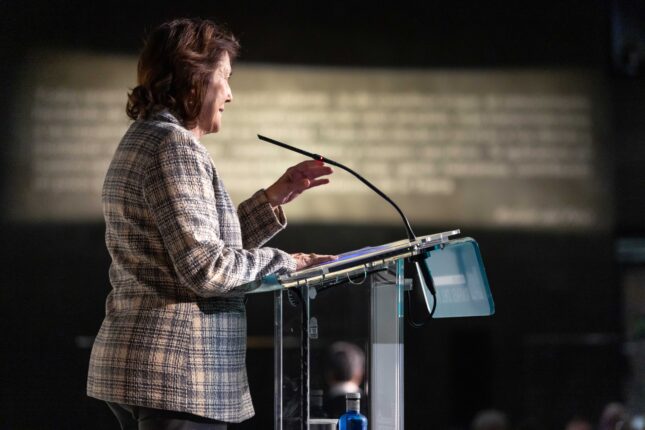
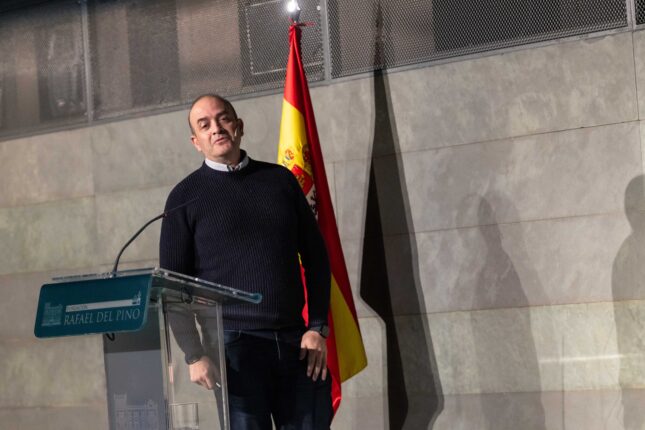
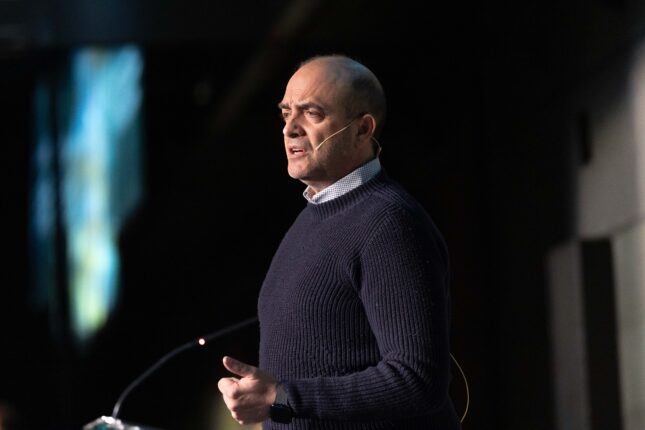
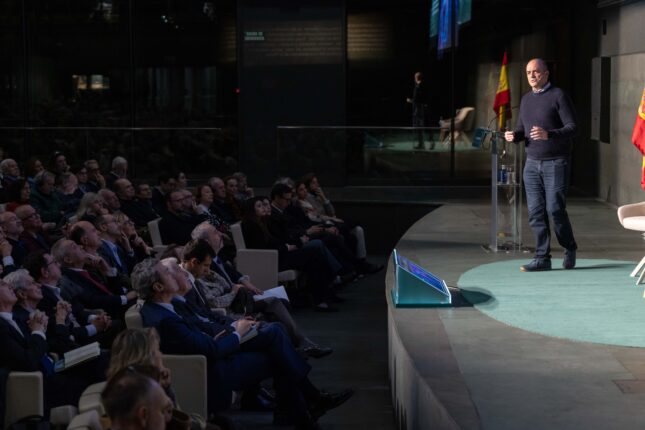
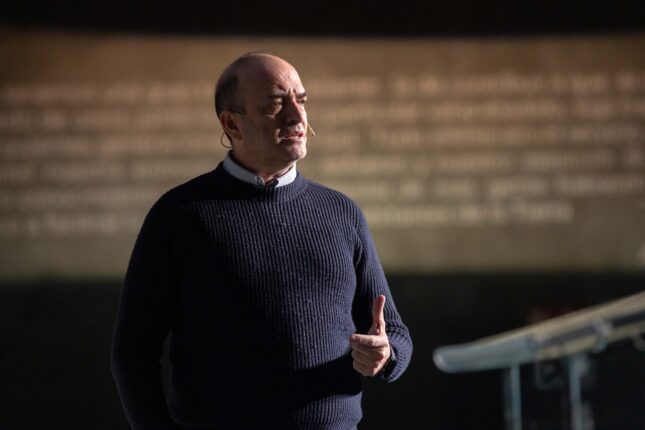
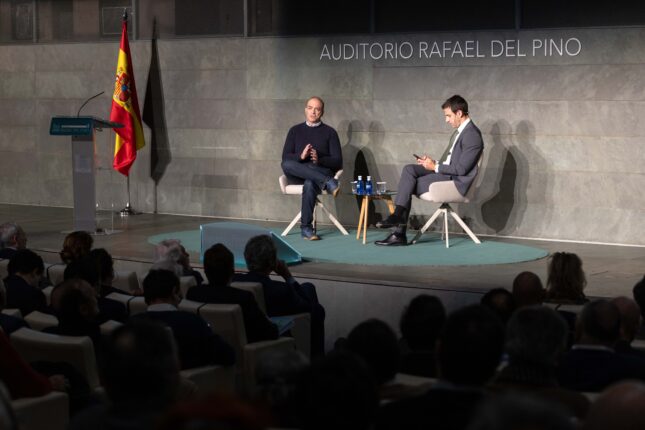
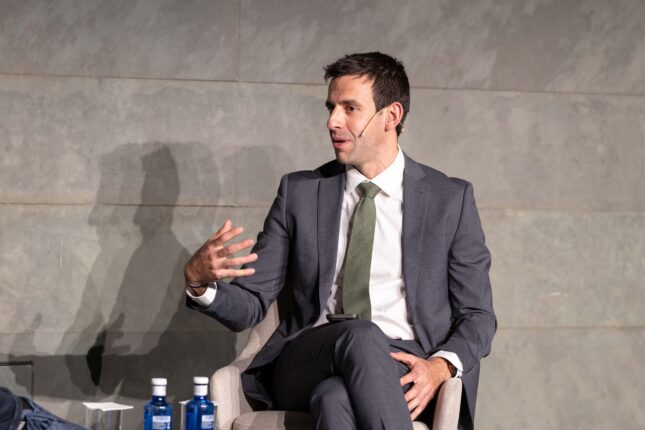
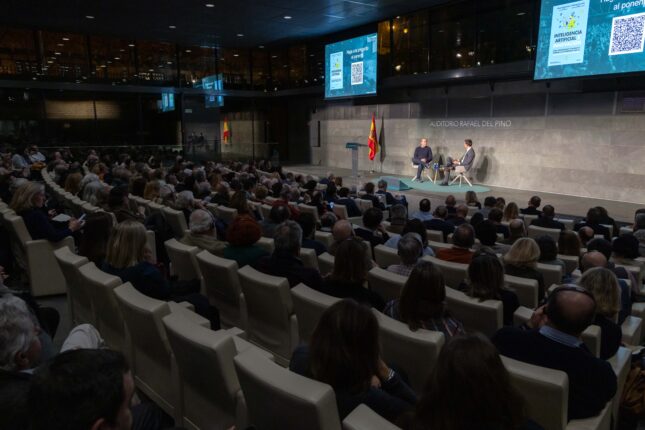
On 18 February 2026, the Rafael del Pino Foundation organised the Master Conference «.«Artificial intelligence and innovation"which was given by Omar Hatamleh on the occasion of the presentation of his latest book of the same title published by Deusto. After the conference, he spoke with Álvaro Martínez Higes.
Dr. Omar Hatamleh is former director of Artificial Intelligence at NASA's Goddard Space Flight Center. He is also the agency's lead for the NASA 2040 AI Track programme. Previously, he was chief advisor for Artificial Intelligence and Innovation at Goddard and responsible for NASA's IT strategy at NASA Headquarters, where he was responsible for creating AI strategy and identifying and integrating leading-edge AI and technology solutions that support NASA's missions and goals. Dr. Hatamleh also served as director of innovation, engineering at NASA's Johnson Space Center and executive director of the International Space University's SSP Programme. Dr. Hatamleh has 27 years of experience at NASA and is the author of two books on AI and has published more than 33 articles in international engineering journals with more than 1400 citations. He has received multiple awards and recognitions from NASA, including the Silver Medal of Merit, the NASA Innovation Award and the Superior Merit Award. He holds four engineering degrees and speaks four languages. Dr. Hatamleh is recognised as one of the world's 100 thought leaders in artificial intelligence and innovation and has been an invited speaker at various events, such as the G20, Google, IBM, Dell and the European Investment Fund, and has been featured in various media outlets, including CNN, Forbes, etc.
Álvaro Martínez Higes is CEO and co-founder of Luzia, a leading artificial intelligence personal assistant in LATAM with more than 80 million users. A fellow of the Rafael del Pino Foundation, he holds an MBA from MIT and is a computer engineer.
Summary:
On 18 February 2026, the Rafael del Pino Foundation held the Keynote Lecture «Artificial Intelligence and Innovation», given by Omar Hatamleh on the occasion of the presentation of his latest book, published by Deusto. The speaker's speech was followed by a dialogue with Álvaro Martínez Higes, CEO of Luzia and a fellow of the Foundation.
Artificial intelligence as a force for transformation
In his presentation, Hatamleh identified artificial intelligence as one of the most decisive transformative forces of the 21st century, in a context marked by technological acceleration, the disruption of business models and the reconfiguration of economic and geopolitical balances. In his view, AI is no longer a future promise but an operational reality that is already changing the way we produce, innovate, compete and make decisions.
The expert explained that, despite recent rapid progress, the technology is still in its infancy. narrow or weak artificial intelligence, However, he anticipated that the next few years will see a move towards systems with deeper reasoning capabilities, long-term memory and greater autonomy.
Growing impact on medicine, business and society
Hatamleh particularly highlighted the potential of artificial intelligence in the field of medicine, where it is already enabling significant advances - from improved diagnostics to new ways of tackling complex diseases. In combination with emerging technologies such as quantum computing, digital twins or bioengineering, AI could drive a profound transformation in human health and longevity.
He underlined that the adoption of these tools is set to redefine business productivity and decision-making processes in organisations.
Risks, ethical dilemmas and regulatory challenges
Alongside the opportunities, the speaker warned of the challenges associated with the deployment of artificial intelligence. These included the possible erosion of critical thinking if these tools are used passively, the ethical dilemmas arising from increasingly autonomous systems, the structural impact on employment - especially in jobs of an intellectual nature - and the high energy consumption of digital infrastructures.
In this context, he advocated the need to move towards governance frameworks that ensure systems ethical, safe, transparent and aligned with democratic values, while avoiding over-regulation that can stifle innovation and crowd out talent and companies to other jurisdictions.
Organisational adaptation and new competences
From a business perspective, Hatamleh insisted that organisations and professionals must adopt a decidedly proactive attitude to technological disruption. He recommended starting with pilot projects, driving internal cultural change and encouraging continuous learning.
In his view, competitive advantage will increasingly lie in the ability to combine the potential of AI with distinctively human skills such as deep creativity, empathy, adaptability and critical thinking.
A paradigm shift with global implications
In the ensuing dialogue, Álvaro Martínez Higes raised practical questions about the adoption of AI in the business world, the future of education, the evolution of work and the geopolitical implications of this technology. Both agreed that we are facing a paradigm shift that will require leadership, strategic vision and a constant updating of knowledge.
The session highlighted that artificial intelligence is one of the most influential transformational vectors of our time and that its ultimate impact will depend, to a large extent, on the technological, business, regulatory and ethical choices that will be made in the coming years.
The Rafael del Pino Foundation is not responsible for the comments, opinions or statements made by the people who participate in its activities and which are expressed as a result of their inalienable right to freedom of expression and under their sole responsibility. The contents included in the summary of this conference are the result of the debates held at the meeting held for this purpose at the Foundation and are the responsibility of their authors.
The Rafael del Pino Foundation is not responsible for any comments, opinions or statements made by third parties. In this respect, the FRP is not obliged to monitor the views expressed by such third parties who participate in its activities and which are expressed as a result of their inalienable right to freedom of expression and under their own responsibility. The contents included in the summary of this conference are the result of the discussions that took place during the conference organised for this purpose at the Foundation and are the sole responsibility of its authors.