The treasure of philanthropy: words and deeds that change the world
Pilar García-Ceballos, Mercedes Basso, Luciano Poyato, Marta Rey and Isabel Peñalosa
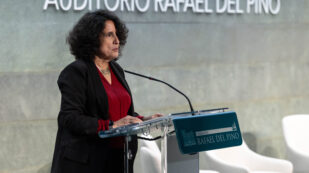
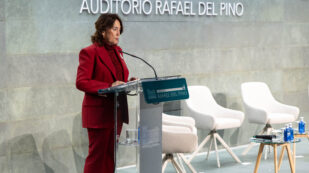
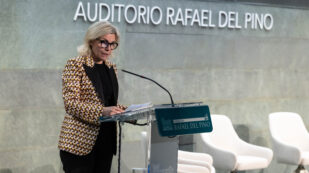
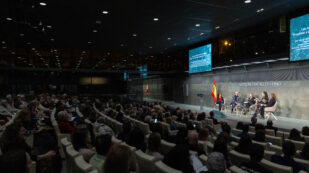
The Rafael del Pino Foundation and CaixaBank Asset Management organised, on 14 January 2025, the event The treasure of philanthropy: words and deeds that change the world.
The event took place according to the following programme;
7:00 p.m. Welcome
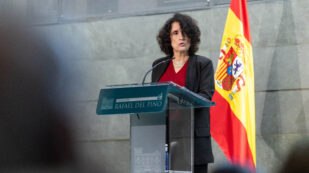
7:10 p.m. Description of the study's conclusions Thesaurus of philanthropy in Spain Marta Rey, Professor of the Faculty of Economics and Business, University of A Coruña.
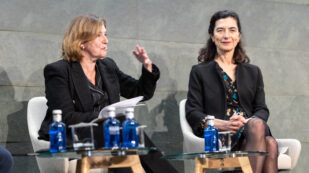
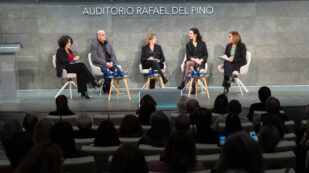
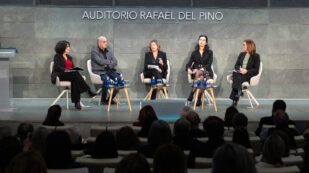
7:25 p.m. Round Table Discussion The new frontiers of philanthropy. The purpose and transformative power of giving and sharing Participants: Pilar García-Ceballos, Chairwoman, Spanish Association of Foundations. Luciano Poyato, President, Third Sector Platform. Mercedes Basso, Head of Philanthropy, CaixaBank Private Banking. Marta Rey, Professor of the Faculty of Economics and Business, University of A Coruña. Isabel Peñalosa, Technical and Institutional Relations Secretary General, Hospitalarias Foundation
Summary:
On 14 January 2025, the Rafael del Pino Foundation and CaixaBank Asset Management organised a meeting with the following participants The treasure of philanthropy: words and deeds that change the world, on the occasion of the presentation of the Thesaurus of Philanthropy in Spain, The book is conceived as a reference tool for understanding, organising and strengthening the philanthropic ecosystem in our country.
Naming well to act better
The event was based on a central idea: the importance of language as a necessary condition for action. Naming well allows us to understand reality better and, consequently, to act more effectively. In this sense, the Thesaurus is not intended as a merely academic or terminological exercise, but as an instrument at the service of civil society, aimed at clarifying concepts, facilitating a shared language and reinforcing the social legitimacy of philanthropy in a context marked by the need for cooperation, trust and civic commitment.
What do we talk about when we talk about philanthropy?
Next, Marta Rey, Professor at the Faculty of Economics and Business at the University of A Coruña and director of the study, presented the main conclusions of the Thesaurus. In her speech, she defined philanthropy as a space for freedom, The European Commission has set up a "general interest fund", in which individuals voluntarily choose the general interest purposes to which they wish to contribute; from civic responsibility, The sensitivity of working with people and for the common good, as well as the demand for accountability and impact; and of participation, as a way to get involved - directly or indirectly - in what matters and contribute to the betterment of the community.
Rey stressed that philanthropy in Spain needed a thesaurus for several reasons. On the one hand, because of the profound transformation experienced in recent decades, marked by professionalisation, digitalisation and growing collaboration with business actors. On the other, because of the persistence of reductionist views that limit philanthropy to monetary donations or the activity of foundations, ignoring the wealth of practices - many of them informal and closely linked to the territory - that characterise the Spanish philanthropic tradition. He also stressed that it is a highly valued but also controversial concept, which contributes to its social undervaluation.
In the face of these prejudices, the director of the study defended the need to recognise the strengths of the Spanish model, which stands out in measurable solidarity practices such as organ donation, donations to food banks or the response to emergencies and catastrophes, both inside and outside Spain.
A map of the philanthropic ecosystem
The Thesaurus is presented as a web-based platform that offers a browsable catalogue of interconnected cards, The main manifestations of philanthropy in Spain today are defined, typified and illustrated with data and real examples. The map ranges from informal, discreet or occasional altruistic impulses, to more formal and strategic modalities: volunteering, monetary and in-kind donations, transfers of use, solidarity legacies, corporate social action, pro bono services, intermediaries and both face-to-face and digital channels.
In addition, the Thesaurus includes a fact sheet on the taxation of philanthropy and can be downloaded in PDF format, making it easy to consult as a reference work. As important as it is to explain what philanthropy is, it is also important to clarify what it is not, contributing to a more precise and rigorous understanding of the concept.
The new frontiers of philanthropy
The day continued with the round table The new frontiers of philanthropy. The purpose and transformative power of giving and sharing, moderated by Isabel Peñalosa, and in which the following participated Pilar García-Ceballos, President of the Spanish Association of Foundations; Luciano Poyato, The Third Sector Platform, President of the Third Sector Platform; Mercedes Basso; and Marta Rey herself.
The dialogue addressed the social perception of philanthropy and the need for a common language to strengthen public trust, as well as the importance of pedagogy, civic education and the creation of spaces of practical community. Participants agreed on the desirability of redrawing philanthropy to respond to today's social challenges - such as persistent poverty, unwanted loneliness or mental health - through partnerships between civil society, business and the public sector.
Likewise, the coexistence between personal philanthropy, corporate philanthropy, impact investment and social entrepreneurship was discussed, underlining that the key lies in aligning purpose, means and time horizon in order to choose the most appropriate instrument in each case.
Words that activate, acts that transform
The meeting concluded with an invitation to turn the Thesaurus into a living tool for consultation, reflection and prescription, capable of activating new trajectories of civic engagement. In a context where philanthropy remains, at times, an area that is not very visible, the Thesaurus aims to contribute to a fuller understanding of its scope and diversity, reinforcing its role in strengthening civil society and democracy.
Summing up the spirit of the day, it was emphasised that words matter, and which, when translated into action, have real transformative power.
The Rafael del Pino Foundation is not responsible for the comments, opinions or statements made by the people who participate in its activities and which are expressed as a result of their inalienable right to freedom of expression and under their sole responsibility. The contents included in the summary of this conference are the result of the debates held at the meeting held for this purpose at the Foundation and are the responsibility of their authors.
The Rafael del Pino Foundation is not responsible for any comments, opinions or statements made by third parties. In this respect, the FRP is not obliged to monitor the views expressed by such third parties who participate in its activities and which are expressed as a result of their inalienable right to freedom of expression and under their own responsibility. The contents included in the summary of this conference are the result of the discussions that took place during the conference organised for this purpose at the Foundation and are the sole responsibility of its authors.