A conversation between Miriam González and Rubén Amón
Give me back democracy. Why Spain urgently needs radical reform.
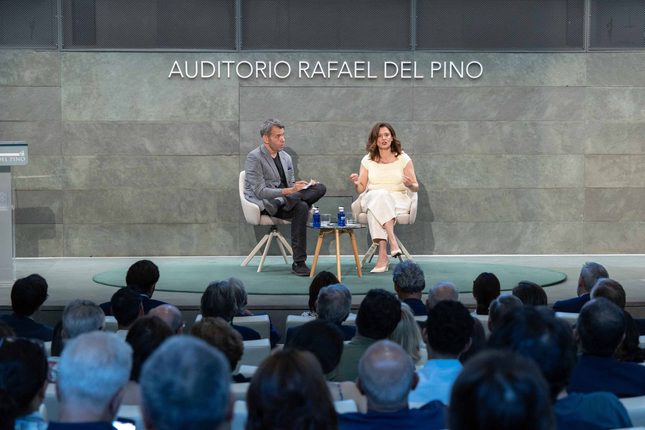
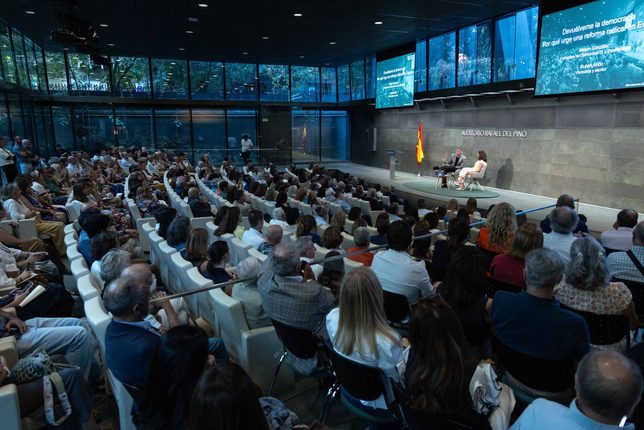
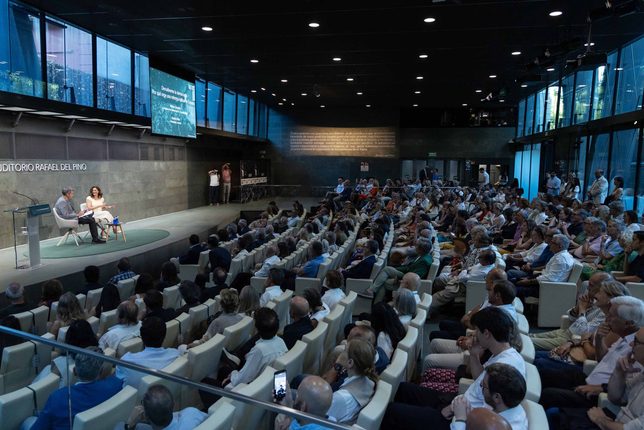
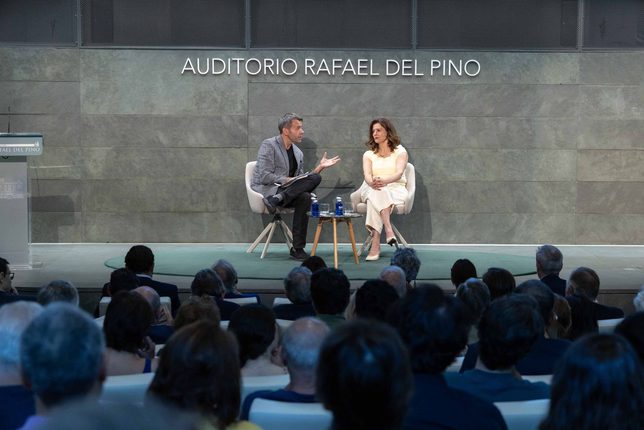
On 9 September, the Rafael del Pino Foundation organised a discussion entitled “Give me back my democracy. Why radical reform is urgently needed in Spain”, featuring Miriam González and Rubén Amón.
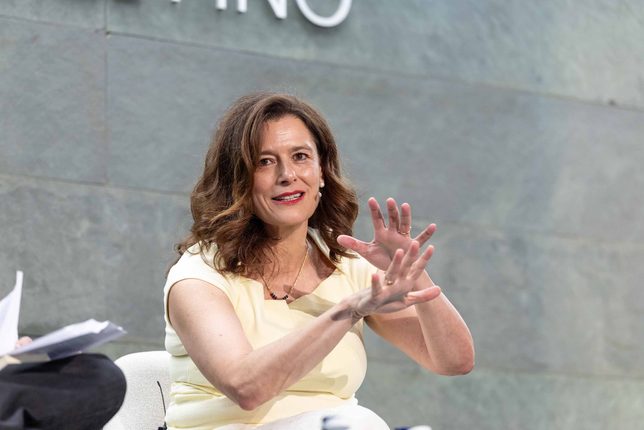
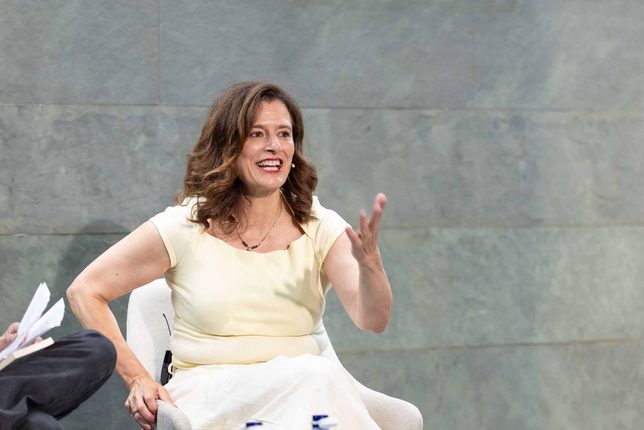
Miriam González Durántez She is a Spanish lawyer specialising in international trade and European Union law. She is the founder of Democracia 21, a political party established in 2026, and of España Mejor, a civil society initiative dedicated to promoting public policy proposals. She is also the founder and chair of Inspiring Girls International. Throughout her professional career, she has worked at the European Commission and the British Foreign Office, and has built her career at various international law firms. She has served as vice-chair of the Supervisory Board of UBS Europe, as a director of Acciona, and as a lecturer in International Trade Policy at Stanford University.
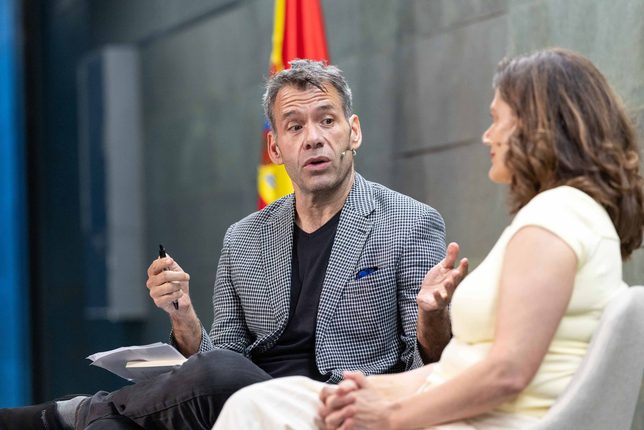
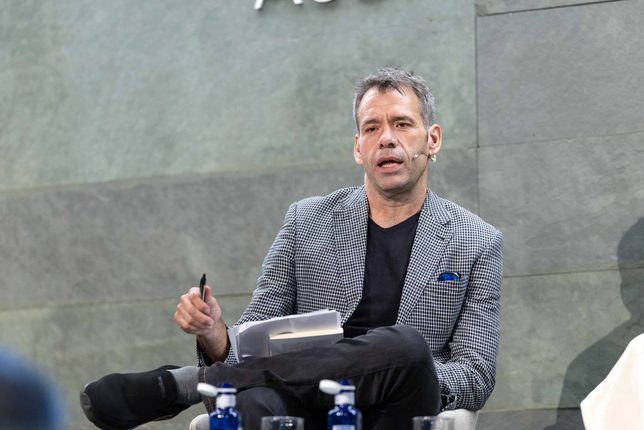
Rubén Amón He is a journalist and writer, and a columnist for El Confidencial and a contributor to Onda Cero, where he takes part in More than one and directs and presents La Cultureta. He began his career at Antena 3 Radio and later joined The World, where he was a special correspondent covering the Balkan War and a correspondent in Rome and Paris. He has also been a columnist and reporter for El País and is a regular contributor to television programmes. The author of numerous books on politics, bullfighting, football and opera, in 2018 he received the Francisco Cerecedo Journalism Prize, awarded by the Association of European Journalists.
Summary:
On 9 September 2026, the Rafael del Pino Foundation organised the dialogue “Give me back my democracy. Why Spain urgently needs radical reform”, in which the following took part Miriam González Durántez and the journalist and writer Rubén Amón, to mark the publication of González Durántez’s book of the same title.
A mature democracy with reforms still to be carried out
The conversation touched on the the quality of Spanish democracy, the functioning of its institutions and the need to undertake reforms that strengthen the checks and balances on power and restore decision-making power to the public. González Durántez argued that the Transition had successfully achieved its aim of leading Spain from dictatorship to democracy, but considered that a second phase remained to be undertaken, aimed at transferring some of the power accumulated by the political parties to the citizens.
Party politics and the role of civil society
One of the key themes of the discussion was the partitocracy. González Durántez argued that the Spanish political system has progressively concentrated power in the hands of the parties and reduced the openness of institutions to civil society. In his view, this process has encouraged the creation of patronage networks and undermined the principles of merit and competence, whilst at the same time making it more difficult for professionals from other fields to enter public life.
The experience gained from civil society initiatives such as España Mejor helped to analyse the difficulties involved in translating reform proposals into political action. González Durántez argued for the need to open up the system to greater public participation and to reduce the barriers that hinder people from outside the traditional party structures from entering public life.
Justice and institutional independence
The independence of the judiciary This also featured prominently in the conversation. González Durántez highlighted the need to restore public confidence in the supervisory institutions, to review the system for electing the Attorney General, and to reduce the influence of political parties in judicial appointments.
In this regard, he called for a reform of the system for electing the General Council of the Judiciary that would strengthen the independence of judges from political power and help to preserve confidence in the institutions.
The press, freedom of expression and democracy
Another of the issues discussed was the role of the the media in a liberal democracy. González Durántez and Amón agreed on the importance of preserving their independence.
During the discussion, the economic vulnerability of many media organisations, institutional advertising and other mechanisms through which political power can exert influence were addressed. González Durántez pointed out that, although there is no censorship in the strict sense in Spain, he does see risks of self-censorship arising from this dependence and argued for the need to establish mechanisms to strengthen the autonomy of the media.
Electoral reform, public administration and the fight against corruption
The conversation also turned to the electoral reform as a means of bringing representatives and the people they represent closer together. González Durántez expressed her support for moving towards more open and flexible candidate lists, although she cautioned against the complexity of such a reform and rejected the idea that amending the electoral law could be considered the only solution.
Among other measures, he proposed strengthening the criteria of merit and competence within the civil service, reducing the number of advisers, improving anti-corruption mechanisms and increasing the accountability of political parties.
Democratic renewal and economic modernisation
This programme of institutional reform, he explained, cannot be separated from the economic and modernisation reforms that Spain needs. In his view, patronage networks, bureaucracy and a lack of transparency hinder the transformation of the economy, improvements in productivity and the ability to compete in a context shaped by the technological revolution and artificial intelligence.
Institutional reform would thus be a necessary condition for freeing up resources, reducing administrative barriers and fostering a more dynamic and competitive economy.
Europe faces the challenge of competitiveness
The dialogue subsequently broadened its scope to include Europe. González Durántez warned of the European Union’s loss of competitiveness, the difficulties in adapting to the new technology-driven economy, and the rise of nationalist and anti-European movements.
In response to this, he called for a Europe with greater capacity to take action and for Member States to be more committed to the reforms needed to boost growth, productivity, innovation and technological autonomy.
Immigration, young people and polarisation
In this context, issues such as the immigration and the growing support amongst some young people for extreme political views. González Durántez attributed part of this phenomenon to frustration over issues such as access to housing, low wages and a lack of prospects.
He argued for the need to return to a public debate that is less emotional and more focused on offering concrete solutions, ensuring that complex issues are not used solely as tools for political confrontation.
Education and artificial intelligence
On the subject of education, he emphasised the need to transform the education and technological adaptation in national priorities. Drawing on international examples such as Estonia, he highlighted the potential for integrating artificial intelligence as a learning tool and emphasised the urgency of preparing the younger generations for an economy undergoing profound transformation.
Transparency and accountability
Throughout the conversation, González Durántez emphasised that democratic renewal does not necessarily require starting with major constitutional reforms. He argued in favour of introducing a number of changes in the areas of transparency, accountability and the evaluation of public policies.
Among these, she highlighted the need for greater clarity regarding election pledges and for public officials to account for the results achieved using public funds. At the same time, she expressed her support for “to overcome the fear” of amending the Constitution whenever necessary.
Regaining the public’s trust
The discussion concluded with a reflection on the need to to restore public confidence in politics and institutions, to strengthen the limits and checks on power and to create greater opportunities for civil society to participate.
A transformation which, in González Durántez’s view, must go beyond the mere alternation of parties in power and focus on changing the rules in a way that improves the functioning of the Spanish democratic system.
The Rafael del Pino Foundation is not responsible for the comments, opinions or statements made by the people who participate in its activities and which are expressed as a result of their inalienable right to freedom of expression and under their sole responsibility. The contents included in the summary of this conference are the result of the debates held at the meeting held for this purpose at the Foundation and are the responsibility of their authors.
The Rafael del Pino Foundation is not responsible for any comments, opinions or statements made by third parties. In this respect, the FRP is not obliged to monitor the views expressed by such third parties who participate in its activities and which are expressed as a result of their inalienable right to freedom of expression and under their own responsibility. The contents included in the summary of this conference are the result of the discussions that took place during the conference organised for this purpose at the Foundation and are the sole responsibility of its authors.