A conversation between Abhijit Banerjee and David Mejía
New responses to the challenge of global development
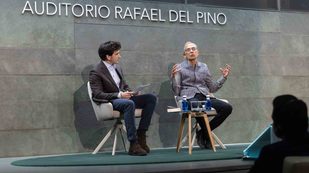
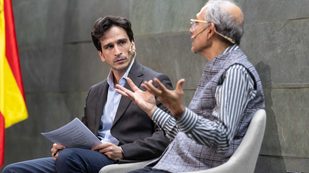
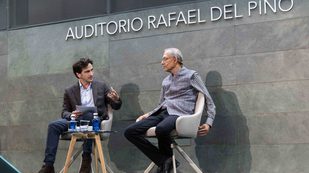
On 16 November 2026, the Rafael del Pino Foundation organised the dialogue «New responses to the challenge of global development» on Abhijit Banerjee, winner of the 2019 Nobel Prize in Economics y David Mejía, lecturer in Philosophy at CUNEF University. To mark the publication of his book Rethinking Poverty: A Radical Shift in the Fight against Global Inequality.
Against a backdrop of economic transformation, inequality and development challenges, Banerjee will reflect on the need to rethink traditional approaches to tackling major economic and social challenges. Drawing on his research, which combines economic analysis with field experiments, he will explore how empirical evidence can help us better understand the causes of poverty and design more effective public policies.
Abhijit Banerjee He is the Ford Foundation International Professor of Economics at the Massachusetts Institute of Technology (MIT) and the Lemann Foundation Professor in the Department of Economics at the University of Zurich. He holds a PhD in Economics from Harvard University and, in 2003, co-founded the Abdul Latif Jameel Poverty Action Lab (J-PAL) with Esther Duflo and Sendhil Mullainathan; he is the lab’s director. In 2019, he received the Nobel Prize in Economics, shared with Esther Duflo and Michael Kremer, for his experimental approach to alleviating global poverty. He is a member of the US National Academy of Sciences, the American Academy of Arts and Sciences and the Econometric Society. He was also a member of the United Nations Secretary-General’s High-Level Panel of Eminent Persons on the Post-2015 Development Agenda. He is the author of numerous academic articles and books; his works include, amongst others, Rethinking poverty y A sound economy for difficult times, co-authored with Esther Duflo. Their research has played a decisive role in transforming development economics and promoting the rigorous evaluation of public policies.
David Mejía He is a lecturer in Philosophy at CUNEF University. He holds a PhD from Columbia University (New York) and was a Rafael del Pino Foundation Fellowship of Excellence holder. He is a columnist for the newspaper El Mundo and regular contributor to Ondacero radio
Summary:
On 16 November 2026, the Rafael del Pino Foundation organised a discussion entitled «New responses to the challenge of global development», featuring Abhijit Banerjee, winner of the 2019 Nobel Prize in Economics, and David Mejía, Professor of Philosophy at CUNEF University. The event was held to mark the publication of the new edition of *Rethinking Poverty: A Radical Shift in the Fight Against Global Inequality*.
During the conversation, Banerjee discussed how experimental research can help us understand the causes of poverty and design more effective public policies. The economist addressed the biases that shape our interpretation of the decisions made by people on low incomes, the limitations of microcredit, and the importance of tailoring education to pupils’ needs.
Rethinking poverty on the basis of evidence
Banerjee explained that the first edition of *Rethinking Poverty*, published in 2011, was conceived with the aim of formulating hypotheses that could be tested through research. From that perspective, acknowledging errors and revising conclusions is part of the advancement of knowledge.
The new edition incorporates the lessons learnt over the last fifteen years: findings that have been confirmed, others that have required further clarification, and issues that were initially given insufficient attention, such as climate change and gender inequalities. Banerjee emphasised that the value of experimentation also lies in understanding why an intervention works and what conditions influence its outcomes.
Making decisions under the pressure of scarcity
One of the key themes of the discussion was the need to understand the circumstances in which people living in poverty make decisions. Banerjee challenged the notion that their behaviour is driven by a lack of rationality or by personal characteristics that set them apart from the rest of society.
Economic insecurity, he explained, forces people to pay constant attention to their spending and exposes them to particularly serious consequences when a mistake is made. To illustrate this, he described an experiment in which giving some workers an advance on their wages reduced their stress and improved the accuracy with which they carried out their tasks. The research showed how having a financial buffer to meet immediate obligations could improve their performance.
Microcredits and the creation of opportunities
Banerjee also examined the expectations placed on microcredit as a means of escaping poverty. As he explained, the studies carried out did not identify any widespread economic improvement amongst those who had taken out these loans. However, long-term follow-up revealed significant results amongst a group of beneficiaries who were already running a business.
This difference led the economist to raise the possibility of channelling larger loans towards entrepreneurs capable of expanding their businesses and taking on staff. His analysis highlighted the importance of identifying who can benefit from each measure and how its effects can be extended to others through job creation.
Teaching tailored to the learner’s level
In the field of education, Banerjee emphasised the need to build on pupils’ existing knowledge. He described a study carried out in schools in India which found that increasing the number of teachers did not improve outcomes whilst the same teaching methodology was maintained.
The lesson learnt from that experience was that additional resources must be accompanied by changes to the way the classroom is organised and to teachers’ duties. If a pupil is struggling with reading, pressing ahead with the curriculum without addressing these difficulties can cause them to fall further and further behind.
Banerjee presented the approach to teaching tailored to the learner’s level, known as ‘Teaching at the Right Level’, and explained how the evidence gathered has helped to support its implementation in various countries. He also emphasised that adapting an intervention to a new context requires diagnosing the problem and understanding local conditions.
From research to public policy
The discussion also addressed the obstacles to translating research findings into public policy decisions. Banerjee pointed out that the urgency to act can make it difficult to evaluate measures, particularly when those responsible believe they already know the solution.
Added to this are the persistence of poorly substantiated accounts and variations in the quality of the available evidence. The economist argued for the need to recognise the limits of our knowledge, to analyse proposals rigorously, and to maintain a close link between research and the specific problems faced by public authorities.
Restoring confidence in development
Towards the end of the meeting, Banerjee expressed his concern about the loss of confidence in cooperation and in development efforts. In the face of this pessimistic view, he highlighted the progress made in health, education and poverty reduction.
The Nobel Laureate highlighted the joint contribution of governments, individuals and organisations that have been involved in this process. He concluded his speech by calling on everyone to recognise the progress made and to continue improving policies through research, evaluation and continuous learning.
The Rafael del Pino Foundation is not responsible for the comments, opinions or statements made by the people who participate in its activities and which are expressed as a result of their inalienable right to freedom of expression and under their sole responsibility. The contents included in the summary of this conference are the result of the debates held at the meeting held for this purpose at the Foundation and are the responsibility of their authors.
The Rafael del Pino Foundation is not responsible for any comments, opinions or statements made by third parties. In this respect, the FRP is not obliged to monitor the views expressed by such third parties who participate in its activities and which are expressed as a result of their inalienable right to freedom of expression and under their own responsibility. The contents included in the summary of this conference are the result of the discussions that took place during the conference organised for this purpose at the Foundation and are the sole responsibility of its authors.