Capitalism. The most powerful economic force of our time
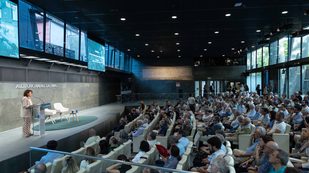
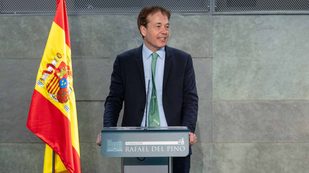
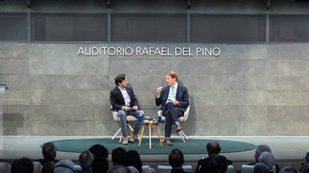
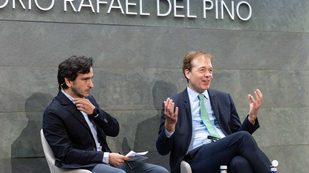
On 23 September 2026, the Rafael del Pino Foundation is organising the keynote lecture «»Capitalism: The most powerful economic force of our time’ which will be given by Sven Beckert to mark the publication of his latest book, “Capitalism: A Global History» published by Critica. Following the lecture, Professor Beckert spoke with David Mejía.
Professor Beckert, one of the leading contemporary historians of capitalism, invites us to explore centuries of economic and social transformation in order to understand how markets, states, technology, labour and power have shaped a system that has connected the world, generated unprecedented prosperity and also given rise to profound tensions. A global perspective on the history of capitalism that offers essential insights into how we have got to where we are today and where we might be heading.
Sven Beckert He is the Laird Bell Professor of History at Harvard University. His research and teaching focus on 19th-century American history, with a particular emphasis on the history of capitalism and its economic, social, political and global dimensions. At Harvard, he teaches courses on the political economy of modern capitalism, the history of American capitalism, and the Gilded Age (Gilded Age), labour history, global capitalism and the history of European capitalism. Together with a group of students, he has researched the historical links between Harvard and slavery, work which culminated in the publication of Harvard and Slavery: In Search of a Forgotten History. He is currently working on a new history of capitalism. He is co-director of the Programme on the Study of Capitalism from Harvard, co-director of the Weatherhead Initiative on Global History (WIGH) and co-editor of the book series America in the World, published by Princeton University Press. Her work has been supported by institutions such as the Guggenheim Foundation, the American Council of Learned Societies, the Humboldt Foundation, the Netherlands Institute for Advanced Studies and the Centre for Scholars and Writers at the New York Public Library, amongst others. She has given lectures in numerous countries around the world.
David Mejía He is a lecturer in Philosophy at CUNEF University. He holds a PhD from Columbia University (New York) and was a Rafael del Pino Foundation Fellowship of Excellence holder. He is a columnist for the newspaper El Mundo and regular contributor to Ondacero radio
Summary:
On 23 September 2026, the Rafael del Pino Foundation organised the keynote lecture «Capitalism: The Most Powerful Economic Force of Our Time», delivered by Sven Beckert to mark the publication in Spain of his book Capitalism: A Global History (Review). Following his talk, the historian spoke with David Mejía.
Beckert structured his lecture around the three words that define the book’s purpose: capitalism, history and global. His thesis is that the expansion of this form of economic organisation constitutes one of the defining processes of the last millennium. It has transformed production, trade and labour, but also everyday aspects of people’s lives. Understanding today’s world therefore requires an examination of how it emerged and how it has changed.
A form of economic organisation with a long history
The historian proposed examining capitalism as a specific historical phenomenon. Although it may seem today to be a natural way of organising the economy, its characteristics — including the accumulation of capital, the transformation of goods and activities into commodities, and the spread of monetary relations — have not been present in all societies.
From this perspective, the book traces what Beckert termed «actually existing capitalism»: the practices of those who traded, produced, worked and governed in different places and at different times. The aim is to explain both its emergence and the conditions that made its expansion possible. As he pointed out, certain elements of capitalist logic can be identified in the activities of long-distance traders some thousand years ago, although capitalism as a system began to take root around five centuries ago.
A story that begins amongst interconnected regions
According to Beckert, it is not possible to pinpoint a single date or city as the birthplace of capitalism. Traders established centres of economic activity in places such as the Islamic world, China, western India, eastern Africa and Europe. These centres were linked by trade routes and formed an increasingly extensive network.
This interpretation places relations between regions at the heart of the narrative. Beckert argued that capitalism emerged as part of a global economy and that even histories that appear to be local require a global perspective. The importance that Europe acquired during certain periods, he explained, must also be analysed in terms of its connections with other parts of the world and the influence these had on its development.
The shift in global production towards Asia reinforces, in his view, the need to revisit narratives that focus exclusively on Europe and North America. It is a matter of acknowledging the role that both regions played whilst, at the same time, incorporating into the analysis the other territories that contributed to the development of capitalism.
The countryside and the State: the driving forces behind its expansion
Although merchants were initially concentrated in towns and cities, and industrialisation later became one of the most visible manifestations of capitalism, Beckert highlighted the role of the countryside. Throughout history, rural areas have provided labour, raw materials, natural resources and investment opportunities. The development of towns and industry cannot be understood without these connections.
He also emphasised the importance of the state. His lecture described a close link between the growth of state power and the expansion of capitalist activities. In the case of Europe, Beckert pointed to the early convergence between the strengthening of states and that of merchant elites as one of the factors helping to explain the region’s trajectory.
The diversity of those who shaped capitalism
The book brings together the experiences of entrepreneurs, traders, workers, peasants and enslaved people. Through this, Beckert seeks to show that the course of capitalism was not determined solely by those who possessed capital or wielded political power. The individual and collective actions of very diverse groups also influenced its development.
This diversity is also evident in its forms of organisation. Capitalism has relied on wage labour, but also on other labour arrangements; it has operated within city-states, empires and large territorial states; and it has coexisted with different political systems. For Beckert, this ability to combine forms of labour, territorial structures and modes of governance helps to explain its dynamism and its endurance.
A system undergoing change
Towards the end of his speech, Beckert drew a distinction between the ongoing changes in economic activity and the moments when the institutional order of capitalism undergoes transformation. He referred to periods of relative stability as «regimes»: stages in which certain rules and forms of organisation come to seem permanent.
In his view, the present is a time of transition. The neoliberal order has weathered crises and faced criticism from various political quarters, whilst it remains unclear what institutional framework will take its place. Beckert concluded that studying the history of capitalism enables us to recognise its changing nature and to better understand the human decisions that have shaped the world as we know it today.
The Rafael del Pino Foundation is not responsible for the comments, opinions or statements made by the people who participate in its activities and which are expressed as a result of their inalienable right to freedom of expression and under their sole responsibility. The contents included in the summary of this conference are the result of the debates held at the meeting held for this purpose at the Foundation and are the responsibility of their authors.
The Rafael del Pino Foundation is not responsible for any comments, opinions or statements made by third parties. In this respect, the FRP is not obliged to monitor the views expressed by such third parties who participate in its activities and which are expressed as a result of their inalienable right to freedom of expression and under their own responsibility. The contents included in the summary of this conference are the result of the discussions that took place during the conference organised for this purpose at the Foundation and are the sole responsibility of its authors.