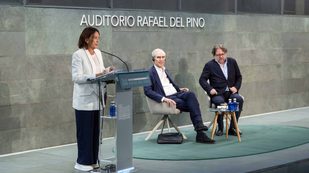
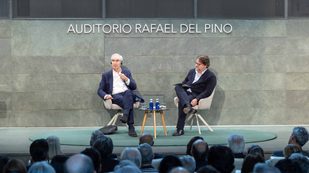
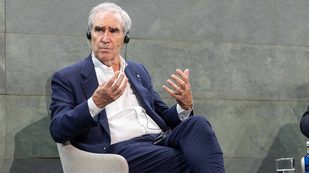
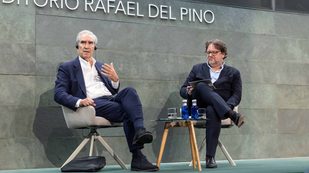
A conversation between Michael Ignatieff and Francisco Beltrán
The future is wide open once again. Freedom and democracy after disillusionment
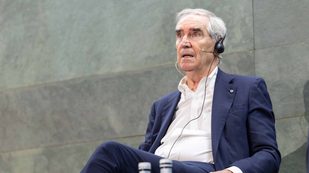
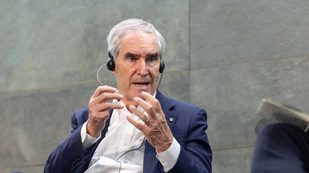
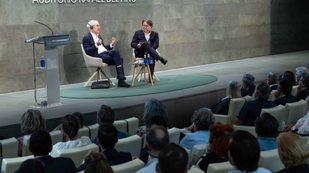
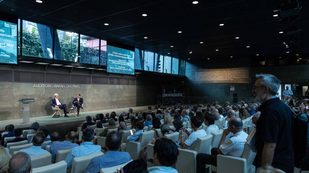
On 16 September, the Rafael del Pino Foundation organised a discussion entitled «The future is open once again: Freedom and democracy after disillusionment» between Michael Ignatieff and Francisco Beltrán.
The discussion enabled us to gain an insight into Michael Ignatieff’s thinking, which centres on the defence of universal rights and constitutional legality, and into his conviction that liberal democracy deserves to be defended precisely because of its fragility: as it is the only political order that acknowledges it is constantly being put to the test. After decades in which its foundations have been called into question, this will also be an ideal opportunity to ask ourselves what role liberalism should play in the times ahead
Michael Ignatieff (Toronto, 1947) is a historian, essayist and academic. He holds a PhD in History from Harvard University and has spent his career at Cambridge, Oxford, Toronto and Harvard itself, where he held the Edward R. Murrow Chair at the Kennedy School of Government. Between 2016 and 2021, he was president and rector of the Central European University, which he led during the years of its expulsion from Budapest and its re-establishment in Vienna: an episode that turned his academic career into a chapter in recent European political history. He is now Chancellor Emeritus and a professor in the Department of Historical Studies at CEU. His work combines the rigour of a historian with the writing style of someone who has been involved in journalism, essay writing and public debate. Professor Ignatieff was a Member of the Canadian Parliament and led the Liberal Party and the opposition between 2008 and 2011, an experience he later recounted without self-indulgence in *Fire and Ashes*. Few contemporary authors have reflected on liberal democracy from within its institutions and from the perspective of its defeats. In 2024, he was awarded the Princess of Asturias Award for Social Sciences.
Francisco Beltrán He is the Director of REMCO. He holds a Bachelor’s degree in Economics from the University of Valencia and a Bachelor’s degree in Political Science from the UNED, a postgraduate qualification in Economics from the London School of Economics, a Master’s degree in Governance from the Autonomous University of Madrid, and a PhD in Political Science, also from the UAM. He is a Professor of Political Science at IE University, the Autonomous University of Madrid, and New York University Madrid. He was a Professor of Comparative Politics at the Munk School of Global Affairs and Public Policy and in the Department of Political Science at the University of Toronto between 2013 and 2021. Previously, he was a Visiting Lecturer at Lund University, a Research Fellow at the Wissenschaftszentrum Berlin für Sozialforschung (WZB), and a Visiting Lecturer at the Munk School of Global Affairs, Research Fellow at the University of British Columbia, Vancouver, and a lecturer at the Universitat Oberta de Catalunya.
Summary:
On 16 September, the Rafael del Pino Foundation organised the dialogue «The future is wide open once more. Freedom and democracy after disillusionment», starring Michael Ignatieff y Francisco Beltrán. The discussion covered the crisis facing the liberal order, the ability of democracies to correct their mistakes, the future of Europe and the major challenges that will shape the outlook for future generations.
From the liberal revolution to a new era of uncertainty
Michael Ignatieff began his reflection by drawing on his own generational experience. Born in 1947 and deeply shaped by his parents’ experiences during the Second World War, he came of age amidst the great upheavals of the 1960s and 1970s.
Civil rights in the United States, the entry of women into the workforce, the rights of homosexuals and decolonisation constituted, in his view, a genuine «liberal revolution» which gradually expanded the scope of individual freedom.
Today, there is strong opposition to that legacy. However, he rejected an exclusively pessimistic view: many of those achievements are difficult to reverse because they have profoundly transformed societies and permanently expanded «the circle of human freedom».
A freedom that cannot be taken for granted
Francisco Beltrán raised one of the central paradoxes of the discussion: the younger generations do not necessarily share the historical narrative of those who lived through those conquests and, at the same time, it is they who will face the consequences of today’s decisions.
Ignatieff acknowledged the difficulty of passing on political experiences from one generation to the next. But he argued that the freedoms which may seem self-evident today did not arise spontaneously: they were hard-won and, for that very reason, should not be taken for granted. Liberal democracy thus appears less as a secure legacy than as a heritage that each generation must understand and renew.
The contradictions of the «free world»
One of the most self-critical moments came when analysing the concept of «free world». Ignatieff highlighted its contradictions: within that bloc, democracies coexisted alongside authoritarian regimes, and, in the name of freedom, the Western powers carried out interventions with serious consequences.
He also acknowledged his own mistake in supporting the intervention in Iraq. The atrocities he had witnessed against the Kurdish population, together with experiences such as those in the Balkans or the genocide in Rwanda, explained the moral impulse that led many liberals to defend military intervention. Iraq ultimately proved, he admitted, that such decisions could cause «far more harm than good».
But he also warned of the opposite risk: that democracies might renounce any form of solidarity beyond their borders. For Ignatieff, one of the major problems of our time is precisely the erosion of the idea of an international community of peoples committed to freedom.
Europe needs to regain its strategic capacity
The conversation then turned to Europe and its position in the new international landscape. Ignatieff placed particular emphasis on the technological challenge. He pointed out that Europe and Canada have scientists, knowledge and talent, but find it difficult to mobilise the large amounts of capital required to compete in artificial intelligence and other strategic technologies.
In his view, Europe needs to overcome the fragmentation of its financial markets and mobilise capital on a continental scale. The problem is not simply having good ideas, but creating the conditions to turn them into innovation, productivity and jobs.
This challenge also calls for a political class capable of looking beyond the immediate situation. Drawing on his own political experience, he explained that day-to-day pressures and electoral cycles narrow the horizon of those in power. He therefore also emphasised the role of civil society and forums for debate in bringing major structural issues onto the public agenda.
Democracy as a «machine of fallibility»
At the intellectual heart of the dialogue, one of Ignatieff’s most characteristic definitions emerged: democracy as a «machine of fallibility».
Its strength, he explained, does not lie in assuming that citizens are always right or make rational decisions, but in providing mechanisms that allow for the recognition of mistakes, the replacement of those in power and a change of course. Through trial and error, he argued, democracies have demonstrated a greater capacity for self-correction than other political systems.
That capacity also depends on trust between representatives and those they represent. Those in power must acknowledge citizens’ concerns and be able, where necessary, to explain difficult decisions. Without that relationship of trust, democracy loses some of its capacity to tackle reforms and collective sacrifices.
Liberalism, growth and the welfare state
Beltrán then raised another fundamental question: if liberalism has historically contributed to greater prosperity and rights, why does it face such difficulties in translating its principles into effective and enduring governments?
The case of France enabled Ignatieff to highlight a tension affecting many European democracies: the gap between the welfare state’s accumulated promises and the economies’ productive capacity to sustain them.
His argument was not to abandon the European social model. On the contrary, he declared himself in favour of a strongly egalitarian economy and comprehensive public services. But he insisted that its sustainability depends on productivity growth and the quality of those services. When citizens pay high taxes and receive excellent services, a virtuous circle of trust can be created; when that relationship breaks down, disaffection grows.
An open future and reasons for hope
Beltrán’s final question echoed the title of the event: the fact that the future is once again open does not necessarily mean that it is reassuring. Ignatieff identified three major contemporary sources of uncertainty: climate change, the transformation of the international order and the development of artificial intelligence.
Politics can address these challenges, but Ignatieff highlighted a fundamental limitation of his liberal conception: not all human problems can be resolved through politics.
When asked about sources of hope, he looked beyond institutional frameworks. Contemplating Velázquez, listening to Bach or Beethoven, sharing a meal with a friend, supporting someone through an illness, or remembering those who have passed away are, for him, experiences capable of sustaining confidence in the future.
In Madrid, he chose a specific symbol: the Prado Museum. When looking at works by Velázquez, Goya or El Greco, he explained, it is possible to recall what human beings are capable of. Beauty thus becomes an unexpected response to disillusionment: it does not eliminate the risks of the future, but it allows us to regain confidence in our ability to shape it.
The Rafael del Pino Foundation is not responsible for the comments, opinions or statements made by the people who participate in its activities and which are expressed as a result of their inalienable right to freedom of expression and under their sole responsibility. The contents included in the summary of this conference are the result of the debates held at the meeting held for this purpose at the Foundation and are the responsibility of their authors.
The Rafael del Pino Foundation is not responsible for any comments, opinions or statements made by third parties. In this respect, the FRP is not obliged to monitor the views expressed by such third parties who participate in its activities and which are expressed as a result of their inalienable right to freedom of expression and under their own responsibility. The contents included in the summary of this conference are the result of the discussions that took place during the conference organised for this purpose at the Foundation and are the sole responsibility of its authors.