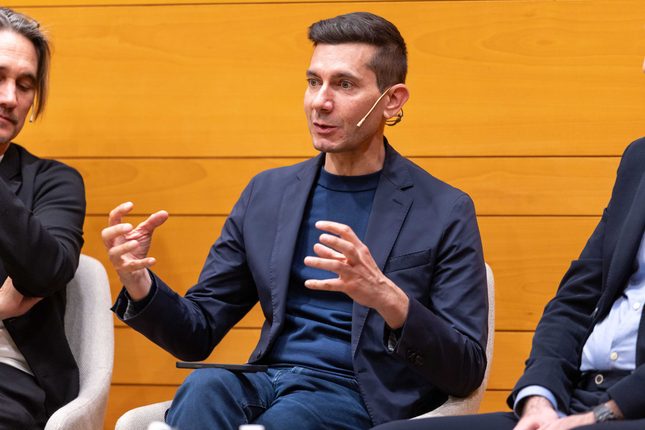
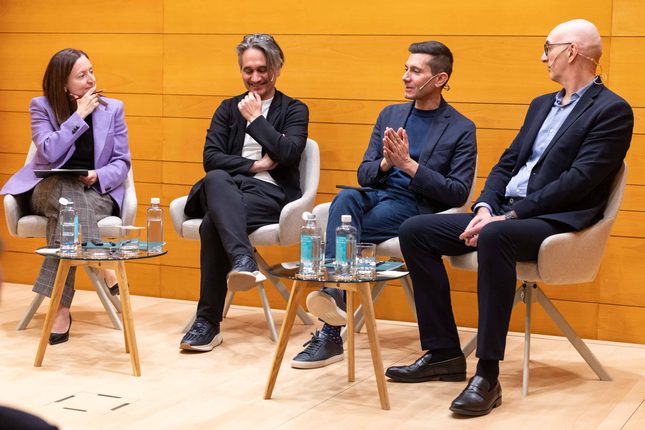
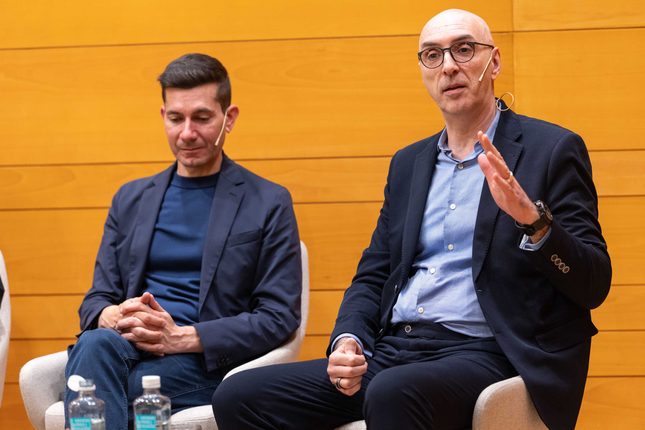
A conversation between Asier Alea, Victor Mulas, Jorge Cortell Albert and Mercedes Delgado
Innovation Hubs and the Global Race for Talent: The Future of Madrid
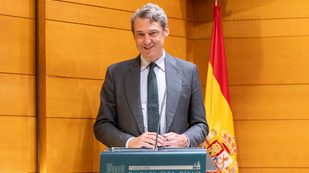
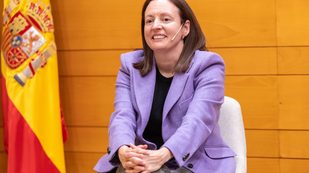
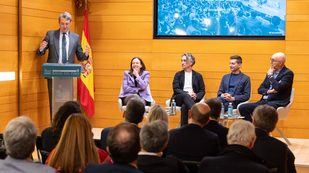
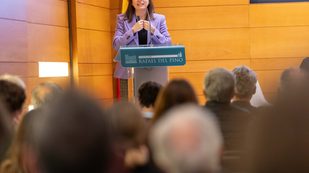
On 5 November, the Rafael del Pino Foundation organised the event «Innovation Centres and the Global Race for Talent:’ The future of Madrid", in which they took part Asier Alea, Director of Global Development at the Basque Culinary Centre; Victor Mulas, Chief Innovation Officer at the Cambridge Innovation Centre (CIC) and Chair of CIC Catalyst; Jorge Cortell Albert, visiting professor at the Institute of Science Tokyo and former Senior Advisor for Healthcare & Life Sciences at Harvard Innovation Labs; and Mercedes Delgado, Associate Professor of Strategy and Innovation at Copenhagen Business School.
Asier Alea is Director of Global Development at the Basque Culinary Centre, where it is driving forward its internationalisation strategy and the development of GOe – Gastronomy Open Ecosystem, an innovation ecosystem designed to bring together talent, research, entrepreneurship and businesses to shape the future of gastronomy and food. He is a graduate magna cum laude He holds a degree in Economics and International Relations from Boston University, undertook postgraduate studies in Economics at the University of Oxford, and holds an MBA from the MIT Sloan School of Management. Throughout his career, he has worked at L.E.K. Consulting, Telefónica, the United Nations, Guascor and Dresser-Rand, and served as Director of Economic Development and Strategic Projects at the Provincial Council of Bizkaia before joining the Basque Culinary Centre.
Victor Mulas is Chief Innovation Officer at the Cambridge Innovation Centre (CIC) and Chair of CIC Catalyst, where he leads international initiatives aimed at designing and developing innovation and entrepreneurship ecosystems. He has over twenty years’ experience in innovation, technology and start-up ecosystems. Before joining CIC, he spent more than twelve years at the World Bank, where he led programmes relating to disruptive technologies, innovation, smart cities and entrepreneurial ecosystems. He has advised governments and organisations in various countries on innovation and entrepreneurship policies and is also involved in initiatives relating to Japan’s start-up ecosystem.
Jorge Cortell Albert is visiting lecturer at the Institute of Science Tokyo, where he works at the Centre for Medical Innovation, and Executive Director of TECH-Tokyo. Between 2023 and 2025, he was Senior Advisor for Healthcare & Life Sciences at Harvard Innovation Laboratories, where he worked with entrepreneurs and researchers on the development of innovation projects in the life sciences and healthcare. A serial entrepreneur and specialist in technological innovation, he has developed projects in fields such as artificial intelligence, precision medicine, clinical genomics, medical imaging and digital pathology. He has also been a Senior Fellow in international innovation at the Technology and Entrepreneurship Centre at Harvard and a Venture Partner at NLC Health.
Mercedes Delgado is an associate professor of Strategy and Innovation at Copenhagen Business School and Research Affiliate at MIT. His research examines the role of clusters industrial sectors and innovation ecosystems in the areas of job creation, entrepreneurship, innovation, inclusion and resilience. It has developed new methodologies for defining and mapping clusters industry and supply chains, and has been involved in projects aimed at understanding how businesses, institutions and regions can make better use of scientific and technological talent. She holds a PhD in Business Economics from the Complutense University of Madrid, a Master’s degree in Economics from Northwestern University, and has undertaken postdoctoral research at Harvard Business School and the National Bureau of Economic Research. She is also co-director of the annual programme Frontiers of Innovation and Entrepreneurship, developed by the Rafael del Pino Foundation and the MIT Sloan School of Management.
Summary:
On 5 November 2026, the Rafael del Pino Foundation organised the event «Innovation Centres and the Global Race for Talent: The Future of Madrid», featuring Asier Alea, Director of Global Development at the Basque Culinary Centre; Víctor Mulas, Chief Innovation Officer at the Cambridge Innovation Centre (CIC) and Chair of CIC Catalyst; Jorge Cortell Albert, visiting professor at the Institute of Science Tokyo and former Senior Advisor for Healthcare & Life Sciences at Harvard Innovation Labs; and Mercedes Delgado, associate professor of Strategy and Innovation at Copenhagen Business School, who moderated the discussion.
The meeting addressed the challenges and opportunities facing Madrid as it seeks to establish itself as an international centre of innovation, attract and retain talent, and develop business ecosystems capable of competing globally. Participants analysed the experiences of some of the leading international innovation hubs and reflected on the strategies needed to transform scientific and technological knowledge into economic growth, start-ups and quality employment.
Specialisation as a driver of competitiveness
Mercedes Delgado opened the meeting with a reflection on the role of industrial clusters and innovation centres in economic development. Drawing on the work of Michael Porter, she emphasised that a region’s competitiveness does not depend on replicating the models of other regions, but on identifying and strengthening its own comparative advantages.
In this regard, he explained that industrial clusters are characterised by the geographical concentration of interconnected companies and institutions that share knowledge, talent, technology and infrastructure. Innovation centres play a vital role as links between universities, companies, entrepreneurs and investors, facilitating the transfer of knowledge and the emergence of new business opportunities.
Delgado presented an analysis of the competitive position of Spain and Madrid. According to the data presented, Spain ranks 23rd globally in terms of patents registered in the United States, with approximately 4,500 during the period analysed. Although the country possesses significant technological capabilities in sectors such as the biopharmaceutical industry, medical devices, machinery, chemicals, advanced materials and the aerospace industry, its level of innovation remains lower than that of other developed economies.
In the case of Madrid, he pointed out that the city ranks 47th amongst the world’s leading technology hubs, according to data from the 2025 Global Innovation Index, although it drops to 74th place when innovation intensity is taken into account. In his view, these indicators reflect the existence of considerable scope for improvement in the protection of knowledge, technology transfer and the commercialisation of innovations.
He identified financial services, business software, cybersecurity, logistics, mobility, healthcare, video games and advanced materials as Madrid’s strengths. He argued that the innovation strategy should build on these existing capabilities and explore how they can be combined with emerging technologies such as artificial intelligence.
Innovation hubs: reputation, ambition and international connections
Asier Alea presented the Basque Culinary Centre’s experience and the development of GOe, the Gastronomy Open Ecosystem, as an example of an innovation centre built on the capabilities and international reputation of a region.
He explained that the innovation centres with the greatest capacity for transformation share several characteristics: an ambitious purpose, a recognisable identity, architecture that encourages interaction, appropriate governance and strong links with international networks.
In his view, specialisation is a key advantage. In contrast to the aspiration to compete simultaneously in numerous sectors, he argued in favour of concentrating efforts on specific areas where there is a real possibility of achieving a position of international leadership.
The case of the Basque Culinary Centre demonstrates, as he pointed out, how a well-established reputation in gastronomy can serve as a foundation for attracting businesses, researchers and entrepreneurs from all over the world. GOe combines training, research, specialised infrastructure and international connections to drive innovation in the food sector.
Alea emphasised that the value of these centres lies not solely in their facilities, but in their ability to become essential hubs within an economic sector. Reputation, expertise, infrastructure and an international network are, in his view, the four key assets that enable them to attract talent and generate new opportunities.
From workspaces to innovation ecosystems
Víctor Mulas analysed the development of the Cambridge Innovation Centre, which was founded in 1999 and, according to the figures presented during the meeting, currently comprises fifteen centres spread across various continents.
He explained how the initial model, based on the concentration of start-ups in shared workspaces, has evolved into a much more complex structure that combines specialised infrastructure, business communities, international connections and mechanisms to facilitate the commercialisation of new technologies.
For Mulas, simply bringing companies together under one roof is not enough. It is essential to foster relationships between them through regular activities, professional networking events and mechanisms that facilitate access to investors, large companies, researchers and potential clients.
Notable examples of this development included the establishment of specialist laboratories in the life sciences and robotics in Boston, as well as initiatives aimed at promoting emerging technologies through collaboration between businesses, research centres and public authorities.
He particularly emphasised the importance of generating demand for innovative companies. The existence of customers willing to purchase and implement new technological solutions is a decisive factor in transforming an innovation into a sustainable business activity.
He also highlighted the role of international networks, which enable scientific and business capabilities from different countries to be linked, markets to be expanded and investment to be attracted. In his view, the competitiveness of an ecosystem depends increasingly on its ability to integrate into these global networks.
Technology transfer and market access
Jorge Cortell focused his speech on the need to improve the mechanisms for transferring the results of research and entrepreneurship to the market.
Drawing on his experience at Harvard and within the Japanese innovation ecosystem, he explained that one of the main obstacles to the growth of start-ups is the difficulty in gaining access to major clients and establishing stable business relationships.
In this context, he presented the TECT Tokyo model, which is designed to facilitate technology transfer and collaboration between established companies, start-ups and research centres. According to the findings of its first impact report, presented during the meeting, the initiative has helped to generate more than 25 technology transfer agreements and an economic impact in excess of 1 billion dollars.
Cortell argued that sales are a key indicator of business success and that collaboration with large companies can dramatically accelerate the growth of start-ups. He therefore considered it necessary to devise mechanisms to facilitate the effective adoption of new technologies, ensuring that innovation projects are not confined to pilot schemes with no commercial follow-through.
During his speech, he also announced the international expansion of TECT Tokyo through new centres in Monterrey, Bogotá, Seoul, Taipei and Madrid. He emphasised that the choice of Madrid was due, amongst other factors, to its potential as a hub connecting Europe, Asia and Latin America, as well as to the opportunities for collaboration with ICEX.
Talent and continuous professional development
The participants agreed that the availability of talent is a necessary, but insufficient, condition for building competitive innovation ecosystems.
Víctor Mulas pointed out that universities play a key role in generating scientific and technological knowledge, although they often face difficulties in turning that knowledge into businesses capable of growing. Innovation centres can bridge that gap by providing access to infrastructure, funding, business advice and commercial networks.
Jorge Cortell emphasised the importance of supporting the professional development of talent throughout their entire career. In an environment characterised by rapid technological change, continuous learning and the ability to build multidisciplinary teams are essential. He outlined examples of bespoke executive training programmes that incorporate data analytics and artificial intelligence tools to identify skills, improve collaboration and facilitate team building.
Asier Alea added that innovation centres also help to attract talent through their reputation and their ability to offer opportunities for learning, collaboration and international exposure.
The discussion also addressed the importance of diversity and inclusion. The participants argued that environments open to professionals from different backgrounds, with different experiences and profiles, encourage the exchange of ideas and broaden the scope for innovation.
A commitment to deep technologies
Another key topic at the meeting was the development of so-called ‘deep technologies’, characterised by their high scientific complexity, significant funding requirements and long development times.
Jorge Cortell warned that these technologies require a long-term vision that often clashes with the time horizons of public authorities and large companies. He argued for the need to take risks and maintain sustained investment in projects whose commercial returns may take decades to materialise.
Víctor Mulas cited the British model of the Advanced Research and Invention Agency (ARIA) – inspired by the US experience of DARPA – as a reference, which promotes high-risk research with significant transformative potential.
Both agreed that the development of these technologies should not be assessed solely on the basis of the success of their ultimate objective. During the research process, new companies, materials, components and applications may emerge that generate economic and technological value long before the initially envisaged result is achieved.
The creation of mechanisms that link scientific research with commercialisation and enable talent and technological capabilities to be retained within the ecosystem is, therefore, a strategic priority.
In which sectors can Madrid take the lead?
Towards the end of the meeting, the participants reflected on the specific opportunities available to Madrid to position itself in the international competition for talent and innovation.
Víctor Mulas suggested that the city should identify those areas in which it has an international reputation capable of attracting companies and professionals from other countries. Among the potential opportunities, he mentioned technologies linked to sport, health, wellbeing and the experience economy, capitalising on the concentration of institutions, events and existing capabilities in Madrid.
Asier Alea agreed on the importance of building on internationally recognised strengths and advocated the idea of turning Madrid into a global hub for companies specialising in specific areas of technology. The aim, he explained, should be for professionals and companies from all over the world to regard Madrid as an essential stop on their journey when developing projects in those specialist fields.
Mercedes Delgado proposed exploring the opportunities arising from combining established industrial sectors, such as advanced materials, with emerging technologies such as artificial intelligence. This combination would make it possible to capitalise on existing productive and scientific capabilities to develop new competitive advantages.
Jorge Cortell advocated an even more precise specialisation, focused on specific segments within major sectors. In areas such as health and longevity, for example, Madrid could identify specific activities in which it has advantages and use these to build a distinctive international position.
The participants also discussed the role of public authorities. They agreed on the importance of setting out an ambitious strategic vision, facilitating business activity, reducing administrative barriers and fostering collaboration between the various stakeholders. Mulas also highlighted the value of certain initial public investments in reducing risks and subsequently mobilising private resources.
Madrid as an international hub for innovation
The meeting concluded with a joint discussion on Madrid’s potential to become a key hub within international innovation networks.
Víctor Mulas highlighted the transformation the city has undergone in recent years and, in particular, its growing links with Latin America. In his view, this position offers unique opportunities to attract capital, businesses and international talent, by facilitating access to both the European and American markets.
Jorge Cortell agreed that Madrid has capabilities that are not yet sufficiently well known in other international ecosystems. He argued for the need to improve its international profile and raise the profile of its scientific institutions, technology companies and opportunities for collaboration.
Asier Alea emphasised that developing major innovation projects requires moving beyond an exclusively local perspective and embracing objectives with an international scope. Rather than relying on things to turn out for the best, he argued for the need to actively promote initiatives capable of transforming the ecosystem.
In conclusion, the participants agreed that Madrid possesses the talent, entrepreneurial capabilities, institutions and international connections on which to build a more prominent position in the global innovation economy. To harness this potential, it will be necessary to combine specialisation, ambition, technology transfer, public-private collaboration and greater integration into international knowledge and entrepreneurship networks.
The Rafael del Pino Foundation is not responsible for the comments, opinions or statements made by the people who participate in its activities and which are expressed as a result of their inalienable right to freedom of expression and under their sole responsibility. The contents included in the summary of this conference are the result of the debates held at the meeting held for this purpose at the Foundation and are the responsibility of their authors.
The Rafael del Pino Foundation is not responsible for any comments, opinions or statements made by third parties. In this respect, the FRP is not obliged to monitor the views expressed by such third parties who participate in its activities and which are expressed as a result of their inalienable right to freedom of expression and under their own responsibility. The contents included in the summary of this conference are the result of the discussions that took place during the conference organised for this purpose at the Foundation and are the sole responsibility of its authors.